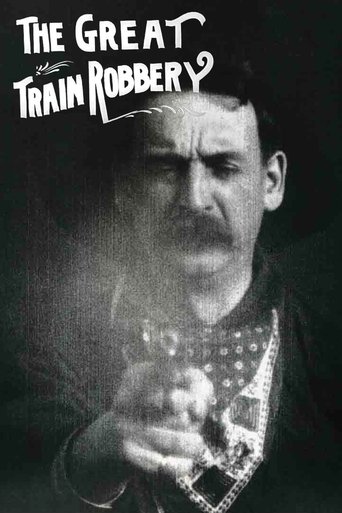
Walter Cameron
Actor
Active: 1903
About Walter Cameron
Walter Cameron was an early American film actor who appeared during the pioneering days of cinema. His most notable contribution to film history was his appearance in Edwin S. Porter's groundbreaking Western 'The Great Train Robbery' in 1903, one of the most significant early narrative films. Cameron was part of the cast during a period when filmmaking was still experimental and actors often came from theatrical backgrounds or were simply hired for specific productions. His career appears to have been extremely brief, with documented activity limited to the year 1903, which was common for many early film actors who either returned to stage work or left the industry entirely. Like many of his contemporaries from this era, detailed biographical information about Walter Cameron is scarce, as early cinema documentation was often incomplete and many performers were not considered stars worthy of detailed record-keeping. His participation in 'The Great Train Robbery' places him among the actors who helped establish the foundation of narrative filmmaking in America.
The Craft
Milestones
- Appeared in 'The Great Train Robbery' (1903), one of the most influential early American films
Best Known For
Must-See Films
Working Relationships
Worked Often With
Studios
Why They Matter
Impact on Culture
Walter Cameron's cultural impact is primarily derived from his participation in 'The Great Train Robbery,' a film that revolutionized cinema by demonstrating the potential of narrative storytelling in motion pictures. While his individual contribution may have been small, he was part of a production that established many filmmaking conventions that would influence generations of filmmakers. The film's success helped prove that narrative films could be commercially viable, paving the way for the development of the American film industry. As one of the actors in this landmark production, Cameron represents the anonymous pioneers who helped establish the art and craft of film acting during cinema's formative years.
Lasting Legacy
Walter Cameron's legacy is tied to his role in one of cinema's most important early films. 'The Great Train Robbery' is frequently studied in film history courses as a groundbreaking work that established many cinematic techniques and narrative conventions. While Cameron himself may not be remembered as an individual, his contribution to this pivotal film places him among the foundational figures of American cinema. His brief career exemplifies the transient nature of early film work, where many actors appeared in only one or two productions before disappearing from historical records. The preservation of 'The Great Train Robbery' ensures that Cameron's work, however brief, continues to be seen by audiences interested in the origins of cinema.
Who They Inspired
Due to his extremely brief career and the limited documentation of his work, Walter Cameron's direct influence on other actors or filmmakers cannot be definitively established. However, as a participant in 'The Great Train Robbery,' he was part of a production that influenced countless future filmmakers and actors through its innovative techniques and storytelling methods. The film's success helped establish templates for Western films and action sequences that would be emulated for decades. Cameron represents the generation of performers who helped establish the basic vocabulary of film acting during the transition from stage to screen performance.
Off Screen
Very little is known about Walter Cameron's personal life, which was typical for many early film actors who were not considered major stars. Documentation about actors from this era was often minimal, as the film industry was still in its infancy and the concept of movie stardom had not yet developed.
Did You Know?
- Appeared in 'The Great Train Robbery' (1903), one of the first American narrative films
- His film career lasted only one year according to available records
- Worked with pioneering director Edwin S. Porter
- Participated in a film that was only 12 minutes long but revolutionary for its time
- His film was produced by the Edison Manufacturing Company, Thomas Edison's film studio
- The film he appeared in is preserved in the U.S. National Film Registry
- Like many early film actors, he was likely a stage actor who tried the new medium of film briefly
- His film included one of the first examples of cross-cutting in cinema history
- The film he appeared in was shot in New Jersey, early Hollywood's East Coast predecessor
- His participation came before the concept of movie stars had been established in America
Frequently Asked Questions
Who was Walter Cameron?
Walter Cameron was an early American film actor who appeared during cinema's pioneering era. He is primarily known for his role in Edwin S. Porter's groundbreaking 1903 film 'The Great Train Robbery,' one of the most influential early American narrative films.
What films is Walter Cameron best known for?
Walter Cameron is best known for his appearance in 'The Great Train Robbery' (1903), a landmark film that helped establish narrative filmmaking in America. This appears to be his only documented film role.
When was Walter Cameron born and when did he die?
Specific birth and death dates for Walter Cameron are not available in historical records, which is common for many early film actors who were not considered major stars during the silent era.
What awards did Walter Cameron win?
Walter Cameron did not receive any major awards or recognition during his brief film career. The Academy Awards and other major film honors were not established until decades after his active period in 1903.
What was Walter Cameron's acting style?
Due to limited documentation of his work beyond 'The Great Train Robbery,' Walter Cameron's specific acting style cannot be definitively determined. Early film actors often used exaggerated theatrical techniques adapted for the silent medium.
Why is Walter Cameron significant in film history?
Walter Cameron is significant primarily because he participated in 'The Great Train Robbery,' a revolutionary film that established many cinematic conventions and helped prove the commercial viability of narrative films, thus contributing to the foundation of the American film industry.
Learn More
Films
1 film