
Richard Cramer
Actor
Born: July 3, 1889 in Bryan, Ohio, USA Died: August 9, 1960 Active: 1927-1952 Birth Name: Richard Earl Cramer
About Richard Cramer
Richard Earl Cramer was a prolific American character actor who became one of the most recognizable 'heavies' of the early sound era. Born in Bryan, Ohio, he began his career in high school plays and spent nearly two decades treading the boards in traveling repertory theater and on Broadway before arriving in Hollywood around 1927. His imposing six-foot frame, gravelly voice, and a signature 'snarling' delivery made him a favorite of directors looking for menacing villains, particularly in B-westerns and comedy shorts. Cramer is perhaps most fondly remembered for his recurring roles as an antagonist to Laurel and Hardy, where his ability to play a 'straight' and terrifying bully provided a perfect comedic foil to the duo's antics. Throughout the 1930s, he was incredibly active, appearing in over 250 films, often as a bartender, gangster, or rough-hewn henchman. Despite his typecasting as a villain, his performances were often noted for a sardonically humorous edge that allowed him to transition seamlessly between gritty dramas and slapstick comedies.
The Craft
On Screen
Cramer was known for a 'stagy' and flamboyant acting style that utilized his physical bulk and vivid facial expressions to dominate the screen. His primary tool was his highly idiosyncratic voice—a sly, precisely modulated snarl that could sound both genuinely threatening and sardonically funny. He was often praised by collaborators like Stan Laurel for his ability to play a character completely straight without 'trying to get a laugh,' which paradoxically made the surrounding comedy even more effective.
Milestones
- Established himself as a premier villain in the early talkie era due to his distinctive gravelly voice.
- Became a staple of the Hal Roach and Mack Sennett comedy shorts, working with icons like W.C. Fields and Laurel and Hardy.
- Appeared in over 200 sound films, including nearly 100 Westerns and 14 cliffhanger serials.
- Portrayed the memorable antagonist Judge Beaumont in the Laurel and Hardy classic 'Scram!' (1932).
- Played the menacing ex-con Nick Grainger in 'Saps at Sea' (1940), his final major role with Laurel and Hardy.
Best Known For
Iconic Roles
Must-See Films
Accolades
Special Recognition
- Recognized by the 'Sons of the Desert' (Laurel and Hardy appreciation society) for his significant contributions to the duo's filmography.
Working Relationships
Worked Often With
Studios
Why They Matter
Impact on Culture
Richard Cramer's impact lies in his perfection of the 'menacing heavy' archetype during the transition from silent films to talkies. His voice, which was perfectly suited for the new medium of sound, helped define the sound of the Hollywood villain in the 1930s. He provided a necessary grounded threat in some of the most surreal and absurdist comedies of the era, particularly those of W.C. Fields and Laurel and Hardy, proving that a strong antagonist is essential for great comedy.
Lasting Legacy
Cramer is remembered today as one of the most reliable and colorful character actors of the Golden Age. His work in the Laurel and Hardy shorts remains a subject of study for comedy historians, as he represented the ultimate 'unstoppable force' against which the duo's 'immovable object' of incompetence could clash. He is a cult favorite among fans of B-westerns and early sound serials for his flamboyant and often scene-stealing performances.
Who They Inspired
His style of 'playing it straight' in comedies influenced generations of character actors who realized that the funniest way to interact with a comedian is to be as serious and terrifying as possible.
Off Screen
Cramer was married to a woman named Hilda. He lived much of his later life in Los Angeles, California. After retiring from the screen in the early 1950s, he remained in the city until his death. He was known among friends as 'Dick' and occasionally used the professional spelling 'Rychard' Cramer.
Education
Educated in Bryan, Ohio; participated in high school drama programs before entering professional stock theater.
Family
- Hilda Cramer
Did You Know?
- Stan Laurel specifically requested Cramer for roles because he knew Cramer would never 'wink' at the audience or try to be funny himself.
- He was often cast as a Mexican bandit (such as Joe Portos in 'The Red Rider') despite having no Mexican heritage.
- In the 1910 census, he was listed as an 'inspector' in the early moving picture industry before becoming an actor.
- He appeared in over 250 films, but a significant portion of his 1940s work was uncredited.
- He is sometimes compared to a live-action version of the Disney villain Black Pete due to his physical presence and snarl.
- His final film appearance was an uncredited role in 'The Sellout' (1952).
- He died of cirrhosis of the liver at the age of 71.
In Their Own Words
Scram! Or I'll build a jail for yer! (As Judge Beaumont in 'Scram!', 1932)
I'm Nick Grainger, the guy you sent to the big house! (As Nick Grainger in 'Saps at Sea', 1940)
Frequently Asked Questions
Who was Richard Cramer?
Richard Cramer was a prominent American character actor of the 1930s and 40s, best known for playing menacing villains and 'heavies.' He gained lasting fame for his roles as an antagonist in several Laurel and Hardy comedies and W.C. Fields shorts.
What films is Richard Cramer best known for?
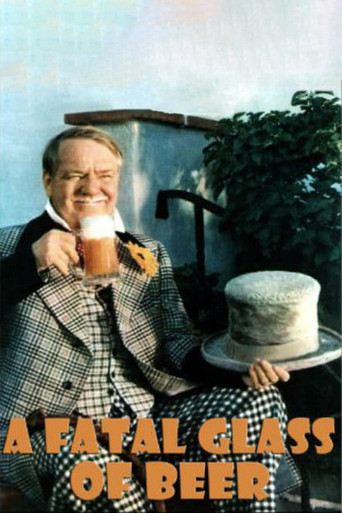
He is best known for the Laurel and Hardy films 'Scram!' (1932) and 'Saps at Sea' (1940), as well as the W.C. Fields short 'The Fatal Glass of Beer' (1933). He also appeared in numerous B-westerns and serials like 'The Red Rider' (1934).
When was Richard Cramer born and when did he die?
Richard Cramer was born on July 3, 1889, in Bryan, Ohio, and passed away on August 9, 1960, in Los Angeles, California.
What was Richard Cramer's acting style?
Cramer specialized in playing intimidating, gravel-voiced villains with a signature snarl. He was highly valued in comedy for his ability to play a role with absolute seriousness, which heightened the humor of the lead comedians.
Did Richard Cramer win any awards?
While he did not win major competitive awards like an Oscar, he is highly regarded by film historians and classic comedy fans for his essential contributions to the Golden Age of Hollywood.
Learn More
Films
3 films