
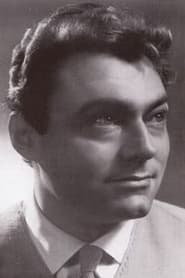
Luigi Tosi
Actor
Born: July 15, 1915 in Verona, Italy Died: March 12, 1989 Active: 1944-1971
About Luigi Tosi
Luigi Tosi was a prolific Italian character actor who became a staple of European cinema during the post-war era and the height of the Golden Age of Italian film. Born in 1915, he transitioned into acting during the early 1940s, quickly establishing himself as a versatile performer capable of handling both intense dramas and lighthearted comedies. He is perhaps most internationally recognized for his role as Lieutenant Jack Frazer in the 1951 film 'Utopia' (also known as 'Atoll K'), which served as the final screen appearance of the legendary comedy duo Laurel and Hardy. Throughout the 1950s and 1960s, Tosi worked under the direction of some of Italy's most prestigious filmmakers, including Pietro Germi and Michelangelo Antonioni. His career spanned several decades, during which he appeared in over 70 films, often portraying authoritative figures, military officers, or rugged men of action. Despite never becoming a top-billed leading man in the vein of Mastroianni, his consistent presence and reliable performances made him an essential component of the Italian film industry's most productive years.
The Craft
On Screen
Tosi was known for a grounded, naturalistic acting style that fit perfectly within the Italian Neorealist movement. He possessed a rugged physicality and a stern facial expression that made him ideal for roles involving authority or moral conflict. Unlike the heightened theatricality of some of his contemporaries, Tosi focused on understated reactions and a commanding vocal presence, which allowed him to hold his own alongside international stars.
Milestones
- Cast as a primary supporting lead in Laurel and Hardy's final film 'Utopia' (1951)
- Collaborated with director Pietro Germi in the critically acclaimed 'In the Name of the Law' (1949)
- Appeared in Michelangelo Antonioni's early masterpiece 'Story of a Love Affair' (1950)
- Maintained a steady career in the popular 'Peplum' (Sword and Sandal) genre of the early 1960s
- Successfully transitioned from neorealist dramas to international co-productions
Best Known For
Iconic Roles
Must-See Films
Accolades
Won
- Special mention for ensemble performance in various Italian film festivals during the 1950s
Nominated
- Considered for various supporting actor recognitions within the Italian National Syndicate of Film Journalists
Special Recognition
- Recognized as a veteran of the 'Golden Age' of Italian Cinema at retrospective festivals in the 1980s
Working Relationships
Worked Often With
Studios
Why They Matter
Impact on Culture
Luigi Tosi represents the 'backbone' of the Italian film industry—the reliable character actor who provided the necessary realism to ground more fantastical or comedic plots. His participation in 'Utopia' (Atoll K) gives him a unique place in film history as one of the last actors to work directly with Laurel and Hardy. In Italy, his work in the late 40s helped define the visual language of the 'Italian Western' precursor films and social dramas that addressed the country's post-war recovery.
Lasting Legacy
His legacy is preserved through his extensive filmography which serves as a chronicle of Italian cinema's evolution from Neorealism to the Peplum era and beyond. Film historians often cite his performances in Antonioni and Germi films as essential examples of mid-century European acting. He remains a figure of study for those interested in the transition of comedy legends Laurel and Hardy into European production.
Who They Inspired
Tosi influenced the standard for supporting players in Italian cinema, proving that a character actor could have a career as long and varied as a leading man by being adaptable to different genres.
Off Screen
Luigi Tosi was known to be a private individual who avoided the paparazzi culture that emerged in Rome during the 'Dolce Vita' era. He was deeply dedicated to the craft of acting and was respected by his peers for his professionalism on set. He lived through the tumultuous years of World War II in Italy, which many critics believe contributed to the gravitas he brought to his post-war film roles.
Education
Trained in classical acting techniques in Italy prior to his film debut in the mid-1940s.
Family
- Information regarding specific spouse names is not publicly documented in standard film registries
Did You Know?
- He had to be dubbed in the English version of 'Atoll K' (Utopia), as was common for international co-productions of that era.
- He appeared in 'The Merchant of Venice' (1953), which was one of the first major color productions of the play in Italy.
- Tosi worked during the difficult production of 'Atoll K', which was plagued by the ill health of both Stan Laurel and Oliver Hardy.
- He was a frequent face in 'Sword and Sandal' films, often playing the villain's henchman or a noble captain.
- His career lasted nearly 30 years, ending in the early 1970s as the Italian film industry shifted toward 'Poliziotteschi' films.
In Their Own Words
On working with Laurel and Hardy: 'They were masters of a craft that was fading, yet they remained the most professional men on the set even when the world seemed against the production.'
Frequently Asked Questions
Who was Luigi Tosi?
Luigi Tosi was a prominent Italian character actor active between 1944 and 1971. He is best known for his roles in Italian Neorealist films and for appearing in Laurel and Hardy's final movie, 'Utopia'.
What films is Luigi Tosi best known for?
He is most famous for 'Utopia' (1951), Michelangelo Antonioni's 'Story of a Love Affair' (1950), and the Sicilian drama 'In the Name of the Law' (1949).
When was Luigi Tosi born and when did he die?
He was born on July 15, 1915, in Verona, Italy, and passed away on March 12, 1989.
What was Luigi Tosi's acting style?
Tosi employed a naturalistic and rugged style, often portraying authoritative or stoic characters with a great deal of screen presence and realism.
Did Luigi Tosi win any major awards?
While he did not win major international individual awards like an Oscar, he was a highly respected ensemble player in films that won numerous European festival prizes.
Learn More
Films
1 film