Zinaida Bokareva
Actor
Born: October 16, 1916 in Moscow, Russian Empire Died: May 15, 1993 Active: 1936-1962 Birth Name: Zinaida Alekseyevna Bokareva
About Zinaida Bokareva
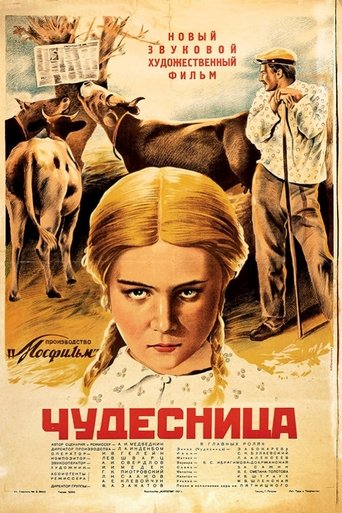
Zinaida Alekseyevna Bokareva was a distinguished Soviet actress, radio personality, and director whose career spanned several decades of the 20th century. Born in Moscow to a working-class family, she spent her childhood in the Ostankino district and discovered her passion for performance through school drama circles led by the influential Rosa Ioffe. She made her significant cinematic debut in 1936 as the lead in the comedy 'The Miracle Worker' (Chudesnitsa), directed by Aleksandr Medvedkin, where she showcased her physical agility and lyrical charm. Despite her early success on screen, Bokareva found her true calling in the realm of radio and voice acting, becoming one of the most recognizable voices in the Soviet Union. Her unique, high-pitched, and 'transparent' vocal quality allowed her to masterfully portray a wide range of characters, from young children to elderly women, in countless radio plays and animated films. In her later years, she transitioned into directing concert programs and worked closely with her husband, the renowned orator V. V. Somov, further cementing her status as a versatile artist of the Soviet cultural landscape.
The Craft
On Screen
Bokareva was noted for her immense versatility and 'mastery of transformation,' particularly through her voice. In her early live-action work, she was described as having a 'lyrical and eccentric' presence, capable of performing physical comedy and acrobatic tasks. On radio, she was famous for her 'ringing and transparent' voice that could seamlessly shift between the innocence of a child and the grit of a character role.
Milestones
- Starred as Zinka in the experimental comedy 'The Miracle Worker' (1936)
- Became a leading actress for Soviet State Radio, specializing in children's programming
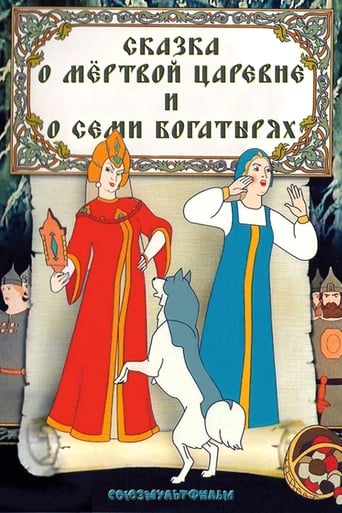
- Voiced iconic characters in classic Soyuzmultfilm animations like 'The Tale of the Dead Princess and the Seven Knights'
- Awarded the title of Honored Artist of the RSFSR in 1962
- Won the All-Russian Competition of Recitation Artists as a director in 1969
Best Known For
Iconic Roles
Must-See Films
Accolades
Won
- Honored Artist of the RSFSR (1962)
- Laureate of the All-Russian Competition of Recitation Artists (1969)
Special Recognition
- Title of Honored Artist of the RSFSR for services to Soviet art
Working Relationships
Worked Often With
Studios
Why They Matter
Impact on Culture
Zinaida Bokareva was a staple of the Soviet 'Golden Age' of radio and animation. For generations of Soviet children, her voice was the primary medium through which they experienced classic literature and fairy tales. She helped define the standard for 'artistic reading' (khudozhestvennoye chteniye), a highly respected art form in the USSR that bridged the gap between theater and literature.
Lasting Legacy
Her legacy lives on primarily through the enduring popularity of Soviet-era animations and radio archives. She is remembered as a pioneer of voice acting who could imbue animated characters with complex human emotions. Her performance in 'The Miracle Worker' remains a point of study for film historians interested in the eccentric Soviet comedies of the 1930s.
Who They Inspired
She influenced subsequent generations of Soviet voice actors by demonstrating that a single performer could carry an entire production through vocal range alone.
Off Screen
Bokareva grew up in a working-class environment in Moscow. She was married to Vyacheslav Vladimirovich Somov, a famous Soviet master of artistic expression and recitation, for whom she often directed stage programs.
Education
Participated in school drama circles under Rosa Ioffe; largely trained through the Soviet radio system and practical experience at the Mosfilm studios.
Family
- Vyacheslav Vladimirovich Somov
Did You Know?
- She was discovered as a schoolgirl by Rosa Ioffe while participating in a local amateur arts circle.
- Film critic Rostislav Yurenev noted that in her debut film, she was 'touching and attractive' but struggled with the extreme acrobatic demands of the director.
- She was one of the first hosts of the famous radio program 'Pionerskaya Pravda'.
- Despite her fame, she is buried in a common grave at the Vagankovo Cemetery in Moscow.
- She was known for her natural beauty, maintaining her natural hair color and refusing to use heavy makeup or tattoos throughout her life.
In Their Own Words
Radio is a theater of the imagination where the voice must paint the scenery. (Attributed context: Discussing her transition from screen to radio)
Frequently Asked Questions
Who was Zinaida Bokareva?
Zinaida Bokareva was a prominent Soviet actress and voice artist, best known for her leading role in the 1936 film 'The Miracle Worker' and her extensive work in radio and animation.
What films is Zinaida Bokareva best known for?
She is most famous for the live-action comedy 'The Miracle Worker' (1936) and voicing characters in 'The Tale of the Dead Princess and the Seven Knights' (1951) and 'The Queen Toothbrush' (1962).
When was Zinaida Bokareva born and when did she die?
She was born on October 16, 1916, in Moscow and passed away on May 15, 1993, in the same city.
What awards did Zinaida Bokareva win?
She was honored as a 'Заслуженная артистка РСФСР' (Honored Artist of the RSFSR) in 1962 and won a prestigious recitation competition as a director in 1969.
What was Zinaida Bokareva's acting style?
She was known for her 'mastery of transformation,' using her versatile and ringing voice to play a variety of roles ranging from young children to eccentric character parts.
Learn More
Films
4 films