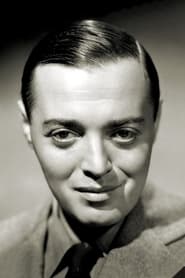
Peter Lorre
Actor
Born: June 26, 1904 in Rózsahegy, Austria-Hungary (now Ružomberok, Slovakia) Died: March 23, 1964 Active: 1929-1964 Birth Name: László Löwenstein
About Peter Lorre
Peter Lorre, born László Löwenstein, was a Hungarian-American actor whose distinctive appearance, haunting eyes, and unique voice made him one of cinema's most memorable character actors. He began his career on the German stage before achieving international acclaim as the child murderer in Fritz Lang's masterpiece 'M' (1931), a performance that established him as a master of psychological intensity. Fleeing Nazi Germany in 1933, he worked in Britain before settling in Hollywood, where he became typecast as villains and eccentric characters in film noir and thrillers. His collaborations with Humphrey Bogart in 'The Maltese Falcon' (1941) and 'Casablanca' (1942) cemented his place in Hollywood history, while his role in 'Arsenic and Old Lace' (1944) showcased his comedic talents. Despite being typecast, Lorre brought depth and humanity to even his most sinister characters, often playing sympathetic villains trapped by circumstances. He struggled with morphine addiction for much of his adult life, which affected both his career and personal relationships. Lorre continued working steadily through the 1950s, including notable roles in 'Beat the Devil' (1953) and his voice work as the titular character in the German film 'Der Verlorene' (1951), which he also co-wrote and directed.
The Craft
On Screen
Peter Lorre developed a unique acting style characterized by his distinctive high-pitched voice, bulging eyes, and nervous mannerisms that created an aura of menace and unpredictability. He specialized in playing morally ambiguous characters, often bringing a sympathetic quality to villains through his ability to convey vulnerability and psychological complexity. His technique combined elements of German Expressionism with naturalistic subtlety, allowing him to create memorable characters through minimal gestures and facial expressions. Lorre's voice became his trademark - a soft, sibilant delivery that could shift from menacing to pathetic in an instant, making him particularly effective in psychological thrillers and film noir.
Milestones
- Breakthrough role in Fritz Lang's 'M' (1931)
- Hollywood debut in 'Mad Love' (1935)
- Memorable performance as Joel Cairo in 'The Maltese Falcon' (1941)
- Iconic role as Ugarte in 'Casablanca' (1942)
- Comedic turn in 'Arsenic and Old Lace' (1944)
- Directed and starred in 'Der Verlorene' (1951)
- Collaboration with John Huston in 'Beat the Devil' (1953)
Best Known For
Iconic Roles
Must-See Films
Accolades
Nominated
- Golden Globe nomination for Best Supporting Actor for '20,000 Leagues Under the Sea' (1954)
Special Recognition
- Hollywood Walk of Fame star at 6641 Hollywood Boulevard
- Inducted into the Online Film & Television Association Hall of Fame
- Honored at the Film Society of Lincoln Center retrospective (1972)
Working Relationships
Worked Often With
Studios
Why They Matter
Impact on Culture
Peter Lorre revolutionized the portrayal of cinematic villains, transforming them from one-dimensional antagonists into complex, psychologically nuanced characters. His distinctive performance style influenced generations of actors playing similar roles, and his physical appearance and voice became archetypes in popular culture, frequently parodied and referenced in cartoons, television, and other media. Lorre's ability to make audiences simultaneously fear and sympathize with his characters helped establish the moral ambiguity that would become central to film noir. His escape from Nazi Germany and subsequent success in Hollywood made him an important figure in the European diaspora of artists who enriched American cinema. Lorre's characters have been referenced in countless works, from Looney Tunes cartoons to modern films, cementing his status as a cultural icon whose influence extends far beyond his filmography.
Lasting Legacy
Peter Lorre's legacy endures as one of cinema's most distinctive character actors, whose unique approach to villainy transformed the archetype of the cinematic antagonist. His performances continue to be studied by actors and film scholars for their psychological depth and technical precision. The 'Lorre archetype' - the soft-spoken, seemingly harmless yet menacing character - has become a permanent fixture in popular culture. His films remain staples of classic cinema programming, and his influence can be seen in the work of actors from Christopher Lee to Werner Herzog. Lorre's ability to transcend typecasting while embracing it demonstrated the power an actor can have within industry constraints. His posthumous reputation has grown as new generations discover his work through film revivals and home media, ensuring his place in the pantheon of cinema's most memorable performers.
Who They Inspired
Peter Lorre's acting technique and characterizations have influenced countless performers who followed, particularly in the realm of playing complex villains and anti-heroes. His method of finding humanity in monstrous characters became a template for actors seeking to add depth to antagonist roles. The distinctive Lorre style - combining vulnerability with menace - can be seen in the work of actors like Vincent Price, Christopher Lee, and more recently, actors like John Malkovich and Christoph Waltz. His influence extends beyond acting to the broader horror and thriller genres, where the 'Lorre type' became a standard character. Directors studying psychological thrillers often reference his performances as examples of how to create tension through subtle performance rather than overt action. His work in German Expressionist cinema helped bridge European and American acting styles, contributing to the evolution of film acting techniques worldwide.
Off Screen
Peter Lorre's personal life was marked by both professional success and personal struggles, including a long battle with morphine addiction that began after medical treatment. He married three times, with his most notable marriage being to German actress Celia Lovsky, who often appeared in films with him. Despite his menacing screen persona, friends described him as gentle, intelligent, and well-read, with a great sense of humor. He became a naturalized American citizen in 1941 and served in the USO during World War II, entertaining troops. His later years were marked by declining health and financial difficulties, though he continued working almost until his death from a stroke at age 59.
Education
Attended school in Vienna, Austria; studied acting under Jacob Moreno, the founder of psychodrama
Family
- Celia Lovsky (1934-1945)
- Kaaren Verne (1945-1950)
- Anne Marie Brenning (1953-1964, until his death)
Did You Know?
- His distinctive voice was the result of a partially cleft palate that was never fully corrected
- He was an accomplished chess player and often played between takes on film sets
- Despite being typecast as villains, he was reportedly terrified of mice in real life
- He turned down the role of the villain in Hitchcock's 'Notorious' (1946)
- His performance in 'M' was based on his observations of real criminals in Berlin
- He was one of the first actors to successfully transition from German to Hollywood cinema
- He spoke five languages fluently: Hungarian, German, English, French, and Italian
- His character in 'The Maltese Falcon' was significantly expanded from the novel due to his screen test
- He was friends with Bertolt Brecht and considered returning to Germany to work with him
- His final film appearance was in 'The Patsy' (1964), released shortly after his death
- He was the first choice to play Dr. Moriarty in 'The Adventures of Sherlock Holmes' (1939)
- His distinctive laugh was often imitated but never duplicated by other actors
In Their Own Words
I don't play villains. I play people who are in conflict with themselves.
In Hollywood, a fellow is always somebody else. I'm not Peter Lorre. I'm what they think I am.
I have made a career out of playing the kind of man no one wants to be.
The camera doesn't lie, but it can be fooled.
I came to America because they told me the streets were paved with gold. When I got here, I found out three things: the streets weren't paved with gold, they weren't paved at all, and I was expected to pave them.
Frequently Asked Questions
Who was Peter Lorre?
Peter Lorre was a Hungarian-American actor renowned for his distinctive appearance, haunting voice, and memorable performances as villains and eccentric characters in classic films. He achieved international fame for his role in Fritz Lang's 'M' (1931) and later became a Hollywood icon through films like 'Casablanca' and 'The Maltese Falcon'.
What films is Peter Lorre best known for?
Peter Lorre is best known for 'M' (1931), 'The Maltese Falcon' (1941), 'Casablanca' (1942), 'Arsenic and Old Lace' (1944), 'The Man Who Knew Too Much' (1934), 'Mad Love' (1935), and 'Beat the Devil' (1953). These films showcase his range from psychological thriller to film noir to comedy.
When was Peter Lorre born and when did he die?
Peter Lorre was born on June 26, 1904, in Rózsahegy, Austria-Hungary (now Slovakia), and died on March 23, 1964, in Los Angeles, California, at the age of 59 from a stroke.
What awards did Peter Lorre win?
While Peter Lorre never won a major competitive award during his lifetime, he received a Golden Globe nomination for '20,000 Leagues Under the Sea' (1954) and was posthumously honored with a star on the Hollywood Walk of Fame. His legacy is recognized through film retrospectives and his inclusion in various halls of fame.
What was Peter Lorre's acting style?
Peter Lorre's acting style was characterized by his distinctive high-pitched voice, expressive eyes, and nervous mannerisms that created an aura of psychological intensity. He specialized in bringing depth and humanity to villainous roles, often playing morally ambiguous characters with a vulnerable quality that made audiences sympathize despite their sinister nature.
Learn More
Films
6 films