
Keys: Space play/pause · ←/→ 10s · F fullscreen · M mute · </> speed
Plot
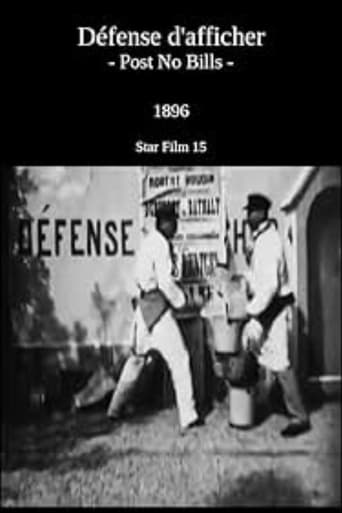
In this comedic short film, a young soldier stands guard duty in front of a military barracks when a series of increasingly comical misfortunes befall him. The soldier attempts to maintain his military bearing and dignity as he encounters various obstacles and absurd situations that test his patience and resolve. Each mishap compounds upon the last, creating a chain reaction of slapstick humor that escalates throughout the film's brief runtime. The film showcases Méliès' trademark blend of theatrical comedy and magical transformations, with the soldier's predicament growing more ridiculous with each passing moment.
Director
 Georges Méliès
Cast
About the Production
Release Date 1903
Box Office Unknown - box office records were not systematically kept for films of this period
Production Star Film Company
Filmed In Méliès Studio, Montreuil-sous-Bois, France
Filmed in Méliès's glass-walled studio using natural lighting. The film employed stage machinery and trap doors for the comedic effects. Like many of Méliès's films from this period, it was likely shot in a single take with the action choreographed in advance. The military set was constructed in Méliès's studio with painted backdrops and theatrical props.









Themes & Topics
Historical Background
This film was created during the golden age of early cinema when Méliès was at the peak of his creative powers. 1903 was a pivotal year in film history, with cinema transitioning from novelty to established entertainment. The film emerged just a few years after the Lumière brothers' first screenings and before the rise of narrative features. France was the world's leading film producer at this time, with Pathé and Gaumont dominating the industry alongside Méliès's Star Film Company. The military theme reflected contemporary European society's fascination with military discipline and hierarchy, particularly in the years leading up to World War I.
Why This Film Matters
This film represents Méliès's contribution to the development of cinematic comedy, showing how theatrical slapstick traditions were adapted to the new medium of film. It demonstrates the early evolution of narrative cinema from simple trick films to more complex comedic situations. The film is part of Méliès's broader legacy of creating a cinematic language of visual storytelling that would influence generations of filmmakers. Its preservation of theatrical comedy techniques in early film provides insight into how performance styles transitioned from stage to screen. The film also illustrates the international nature of early cinema, as Méliès's works were distributed globally and influenced filmmakers across Europe and America.
Making Of
Georges Méliès, a former magician and theater owner, brought his theatrical expertise to this early comedy. The film was shot in his innovative glass studio in Montreuil, which allowed him to control lighting while still using natural sunlight. Méliès personally directed, starred in, and likely designed the sets and props. The production would have involved his regular crew of technicians who helped create the mechanical effects and transformations. The military uniform and props were likely created in-house by Méliès's workshop, which was known for its detailed craftsmanship. Like all his films of this period, it was photographed on 35mm film using a camera Méliès had modified himself.
What Critics Said
Contemporary reviews from 1903 are scarce, but trade publications of the time noted Méliès's films as popular attractions in fairground theaters and music halls. Modern film historians recognize this work as typical of Méliès's comedic output, praising his ability to create engaging visual narratives despite technical limitations. Critics today view such films as important artifacts showing the development of cinematic comedy and Méliès's role as a pioneer of film language. The film is generally assessed as a minor but representative work in Méliès's extensive catalog.
Did You Know?
- This film was released by Méliès's Star Film Company and was cataloged as number 498-499 in their catalog
- The film was sold both in black and white and hand-colored versions, with the hand-colored copies commanding premium prices
- Like many Méliès films, it was likely pirated and distributed in the United States by unauthorized distributors
- The military theme was popular in early cinema, reflecting contemporary interest in military life and discipline
- Méliès often played multiple roles in his films, though in this one he appears to focus on the soldier character
- The film exemplifies Méliès's theatrical background, with its stage-like presentation and choreographed comedy
- This was produced during Méliès's most prolific period (1902-1904) when he was making dozens of films annually
- The title follows a common proverb format that Méliès often used for his narrative films
- The film was likely distributed internationally through Méliès's London and New York offices
- Only fragments of this film are known to survive in film archives, making complete viewing difficult for modern audiences
More film details Visual style, music, quotes, restoration, and more
Visual Style
The film was shot using a single stationary camera positioned to capture the theatrical stage-like setting, typical of Méliès's style. The composition would have been carefully planned to include all the action within the frame, as camera movement was not yet common. The lighting would have been natural sunlight filtered through the glass walls of Méliès's studio, creating a bright, even illumination suitable for the hand-coloring process. The visual style reflects Méliès's background in theater, with its frontal presentation and emphasis on visual clarity.
Innovations
The film utilized Méliès's established techniques of substitution splices and theatrical machinery to create its comedic effects. While not as technically ambitious as his fantasy films, it demonstrates his mastery of in-camera effects and stagecraft. The production employed trap doors and stage machinery that Méliès had adapted from his theater work for cinematic use. The hand-colored versions required meticulous frame-by-frame coloring by skilled artisans, representing significant technical labor for the time.
Music
As a silent film from 1903, it would have been accompanied by live music during exhibition, typically a pianist or small orchestra in theaters. The music would have been improvised or selected from standard classical pieces appropriate to the comedic action. No original score was composed specifically for the film, as was standard practice for films of this era. The musical accompaniment would have varied depending on the venue and the musicians available.
Famous Quotes
No dialogue - silent film
Memorable Scenes
- The escalating series of misfortunes that befall the soldier while he attempts to maintain his military bearing and discipline
What Audiences Thought
Early audiences in 1903 would have viewed this film as part of variety programs in fairground theaters and music halls. The simple, visual comedy would have been accessible to international audiences without the need for intertitles, as films were silent during this period. The military theme and slapstick humor would have been universally understood and appreciated. Méliès's films were popular attractions throughout Europe and America, with this comedy likely drawing laughs from audiences who were still amazed by the novelty of moving pictures.
Film Connections
Influenced By
- French theatrical comedy traditions
- Commedia dell'arte
- Music hall entertainment
- Stage magic and illusion
This Film Influenced
- Early Mack Sennett comedies
- Charlie Chaplin's military-themed films
- Buster Keaton's The General (1926)
Film Restoration
The film is believed to be partially preserved in film archives, though complete copies may be lost. Fragments and possibly complete versions exist in the collections of major film archives including the Cinémathèque Française and the Museum of Modern Art. Some hand-colored versions may survive in private collections. Like many Méliès films, preservation status varies between different archives worldwide.
Where to Watch
- Available on various streaming platforms specializing in classic cinema
- Included in Méliès collections on DVD/Blu-ray
- Viewable at film archives and cinematheques
- Available on YouTube and other public domain platforms