
Wolfgang Heinz
Actor
Born: May 18, 1900 in Pilsen, Austria-Hungary (now Czech Republic) Died: October 30, 1984 Active: 1922-1984 Birth Name: Wolfgang Hirsch
About Wolfgang Heinz
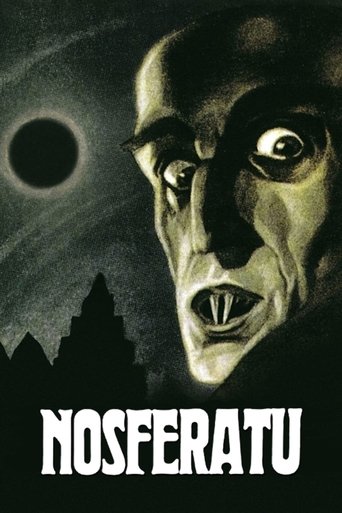
Wolfgang Heinz was a distinguished German-Austrian actor and director whose career spanned over six decades, though he is immortalized in film history for his early appearance in F.W. Murnau's 1922 masterpiece 'Nosferatu'. Born into a family with deep theatrical roots, he began his professional journey on the stage in the early 1920s, quickly becoming a fixture of the Berlin theater scene during the Weimar Republic. Following the rise of the Nazi party, Heinz, who was of Jewish descent and held strong communist convictions, was forced into exile, moving first to Austria and later to Switzerland where he became a leading figure at the Schauspielhaus Zürich. After World War II, he returned to East Berlin, where he became one of the most influential figures in the German Democratic Republic's cultural landscape. He served as the director of the prestigious Deutsches Theater and the Berlin State Drama School, shaping generations of German actors with his commitment to Stanislavski's methods and socialist realism. Throughout his later years, he remained a prolific performer on both stage and screen, earning the highest state honors for his contributions to the arts.
The Craft
On Screen
Heinz was a proponent of the Stanislavski system, emphasizing psychological depth, social context, and intellectual clarity. His style evolved from the expressionist influences of the 1920s into a more grounded, realistic approach that favored subtle emotional resonance over grand theatrical gestures. He was known for his commanding presence and precise vocal delivery, which made him an ideal interpreter of both classical dramas and modern political plays.
Milestones
- Screen debut in the seminal silent horror film 'Nosferatu' (1922)
- Leading member of the Schauspielhaus Zürich during WWII exile (1934-1946)
- Co-founder of the New Theater in the Scala (Neues Theater in der Scala) in Vienna (1948)
- Director of the Deutsches Theater in Berlin (1963-1969)
- President of the GDR Academy of Arts (1968-1974)
- Recipient of the National Prize of the GDR (Multiple years)
Best Known For
Iconic Roles
Must-See Films
Accolades
Won
- National Prize of the GDR, 1st Class (1954)
- National Prize of the GDR, 1st Class (1959)
- National Prize of the GDR (1961)
- Order of the Banner of Labor (1960)
- Patriotic Order of Merit in Gold (1965)
- Honorary Member of the Deutsches Theater (1970)
- Goethe Prize of the City of Berlin (1976)
- Karl Marx Order (1980)
Nominated
- Best Actor - Karlovy Vary International Film Festival (1961)
Special Recognition
- President of the Academy of Arts of the GDR
- Honorary Doctorate from the Humboldt University of Berlin
- Wolfgang-Heinz-Ring (Acting award named in his honor)
- Street named 'Wolfgang-Heinz-Straße' in Berlin-Pankow
Working Relationships
Worked Often With
Studios
Why They Matter
Impact on Culture
Wolfgang Heinz was a bridge between the avant-garde theater of the Weimar Republic and the state-sponsored arts of East Germany. His participation in 'Nosferatu' links him to the foundation of cinematic horror, but his greater impact was in the preservation and evolution of German stage traditions during the Cold War. He was instrumental in maintaining the high standards of the Deutsches Theater, ensuring it remained a world-class institution despite the political isolation of the GDR.
Lasting Legacy
His legacy is twofold: as a silent cinema pioneer and as the 'Grand Old Man' of East German theater. The Wolfgang-Heinz-Ring was established to honor outstanding acting achievements, cementing his name in the annals of German performance art. He is remembered as a man of immense integrity who used his art as a tool for social and political commentary.
Who They Inspired
He influenced the 'Berlin School' of acting, emphasizing a rigorous, intellectual approach to character development. His leadership at the Academy of Arts helped define the cultural policy of a nation, and his performances in DEFA films like 'Professor Mamlock' remain definitive examples of anti-fascist cinema.
Off Screen
Born to actress Camilla Hirsch and actor/director Julius Hirsch, Wolfgang was raised in a theatrical environment. He was deeply political throughout his life, joining the Communist Party of Germany (KPD) in 1930. His political stance defined much of his personal and professional trajectory, leading to his exile and his eventual high-ranking status in East Germany.
Education
Trained privately in acting under the guidance of his father and through various theater workshops in Berlin during the late 1910s.
Family
- Erika Pelikowsky (Married until his death in 1984)
Did You Know?
- He was one of the few actors from 'Nosferatu' to have a significant career in the sound era and post-WWII cinema.
- During his exile in Switzerland, he used the pseudonym 'Wolfgang Hellwig' for some of his political writings.
- He was a close friend of Bertolt Brecht and was one of the first to perform in the Berliner Ensemble.
- His role in 'Professor Mamlock' was particularly poignant as he was a Jewish actor playing a Jewish doctor persecuted by Nazis.
- He lived to the age of 84, remaining active in the arts until shortly before his death.
- The film 'Nosferatu' was his very first credited screen appearance.
- He served as the President of the Academy of Arts for six years, a position of immense cultural power in East Germany.
In Their Own Words
Theater is not a mirror to reflect reality, but a hammer with which to shape it. (Context: Discussing the role of socialist theater in society)
The actor must be the most conscious citizen of his time. (Context: On the responsibility of the performer to understand politics)
Murnau was a poet of the shadows; on the set of Nosferatu, we felt we were part of a dark dream. (Context: Reflecting on his early film career in a later interview)
Frequently Asked Questions
Who was Wolfgang Heinz?
Wolfgang Heinz was a prominent German-Austrian actor and director known for his early role in the silent film 'Nosferatu' and his later leadership of the East German theater scene.
What films is Wolfgang Heinz best known for?
He is most famous for the 1922 silent horror classic 'Nosferatu' and the 1961 anti-fascist drama 'Professor Mamlock'.
When was Wolfgang Heinz born and when did he die?
He was born on May 18, 1900, in Pilsen, and passed away on October 30, 1984, in East Berlin.
What awards did Wolfgang Heinz win?
He won the National Prize of the GDR multiple times and received the Karl Marx Order, the highest honor in East Germany.
What was Wolfgang Heinz's acting style?
He utilized the Stanislavski method, focusing on psychological realism, intellectual depth, and a strong sense of social responsibility in his characters.
Was Wolfgang Heinz involved in politics?
Yes, he was a committed communist and a member of the KPD, which led to his exile during the Nazi era and his prominent role in the cultural life of East Germany.
Learn More
Films
1 film