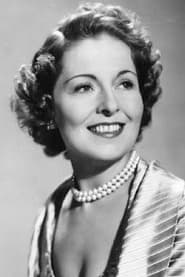
Nora Swinburne
Actor
Born: July 24, 1902 in Bath, Somerset, England Died: May 1, 2000 Active: 1920-1974 Birth Name: Leonora Mary Johnson
About Nora Swinburne
Nora Swinburne was a distinguished English actress whose career spanned over six decades, beginning in the silent era and flourishing through the Golden Age of Hollywood and British cinema. Born Leonora Mary Johnson in Bath, she was the daughter of Henry Swinburne Johnson and Leonora Tamar Brain. She began her journey in the arts as a child, training at the Royal Academy of Dramatic Art (RADA) and making her professional stage debut as early as 1914. While she initially gained fame on the London stage in drawing-room comedies and sophisticated dramas, she transitioned into film during the early 1920s, appearing in silent productions like 'The White Desert' (1922). Swinburne became synonymous with 'ladylike' roles, often portraying upper-class women with a signature blend of grace, poise, and intelligence. Her career reached new heights in the 1940s and 50s with significant roles in international productions such as Jean Renoir's 'The River' (1951) and the epic 'Quo Vadis' (1951). She remained active in the industry until her retirement in the mid-1970s, leaving behind a legacy of refined performance and theatrical excellence.
The Craft
On Screen
Swinburne was celebrated for her 'grace and poise,' often described as having a 'caressing voice' and a 'striking beauty.' Her style was rooted in the classical British theatrical tradition, characterized by a refined, upper-class demeanor and an ability to bring dignity to even the most routine dramaturgy. Critics often noted her 'silent command' and intelligent interpretation of roles, particularly in light comedies and domestic dramas where she could convey deep emotion through subtle gestures, such as the expressive way she handled props or jewelry.
Milestones
- Trained at the Royal Academy of Dramatic Art (RADA) and debuted on stage in 1914
- Established herself as a leading lady in West End drawing-room comedies during the 1920s
- Successfully transitioned from silent films to talkies, maintaining a steady screen presence
- Starred in the critically acclaimed film 'The River' (1951) directed by Jean Renoir
- Played the role of Pomponia in the Hollywood epic 'Quo Vadis' (1951)
- Appeared in the Academy Award-winning 'Anne of the Thousand Days' (1969) as Lady Kingston
- Managed her own theatrical production company in the late 1930s
Best Known For
Iconic Roles
Must-See Films
Accolades
Won
- Honorary Fellow of the Royal Academy of Dramatic Art (RADA)
Special Recognition
- Recognized as one of the 'Silver Sirens' of British Cinema
- Subject of a major obituary in The Guardian highlighting her 60-year contribution to the arts
Working Relationships
Worked Often With
Studios
Why They Matter
Impact on Culture
Nora Swinburne epitomized the 'English Lady' archetype on screen and stage during a period when class and decorum were central to British cultural identity. Her presence in international films like 'The River' helped bring a specific brand of British sophistication to global audiences. She was a mainstay of the West End, contributing to the longevity and prestige of British theatre during the mid-20th century. Her ability to transition from the silent era to high-budget Technicolor epics demonstrated the adaptability and enduring appeal of classically trained British actors.
Lasting Legacy
Swinburne's legacy lies in her remarkable longevity and her status as a quintessential figure of the British 'Golden Age.' She is remembered not only for her film roles but as a pillar of the theatrical community who maintained the highest standards of the craft for over half a century. Her performances in 'The River' and 'Quo Vadis' continue to be studied by film historians for their understated power and technical precision. She remains a symbol of the transition from the stylized acting of the silent era to the more naturalistic but still poised style of the mid-century.
Who They Inspired
She influenced generations of British actresses by demonstrating how to maintain a successful career through aging, moving gracefully from leading lady roles to significant character parts. Her work with directors like Jean Renoir influenced the way 'maternal' roles were portrayed with complexity and inner life rather than as mere background figures.
Off Screen
Nora Swinburne was married three times, all to men involved in the acting profession. Her first marriage was to actor Francis Lister in 1924, which ended in divorce in 1932. She then married Edward Ashley-Cooper in 1934, but they divorced in 1938. Her longest and final marriage was to the esteemed actor Esmond Knight, whom she married in 1946; they remained together until his death in 1987. She had one child from her second marriage.
Education
Educated at Rosholme College, Weston-super-Mare; trained for the stage at the Royal Academy of Dramatic Art (RADA) and the Italia Conti Academy of Theatre Arts.
Family
- Francis Lister (1924-1932)
- Edward Ashley-Cooper (1934-1938)
- Esmond Knight (1946-1987)
Did You Know?
- She was once considered for Anna Pavlova's ballet corps but was told she was too young.
- She made her stage debut at the age of 12 in 'Where the Rainbow Ends'.
- Swinburne was a member of 'Clive Currie's Young Players' in 1914.
- She lived to the age of 97, witnessing nearly the entire history of cinema.
- In 1938, she successfully went into theatrical management with the play 'Lot's Wife'.
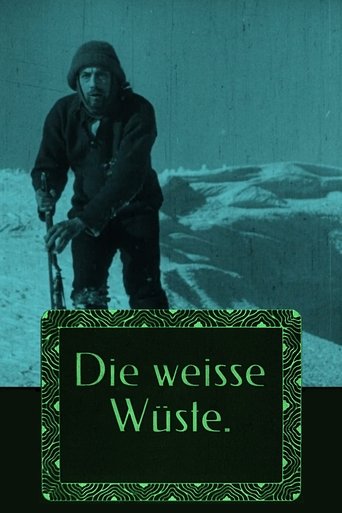
- She appeared in the German silent film 'Die weisse Wüste' (The White Desert) in 1922, which featured live polar bears and seals.
- Her third husband, Esmond Knight, was famously blinded during WWII but continued to act with her help.
In Their Own Words
On her early career: 'I concluded the year [1921] with several cinema plays, which was a charming way to start.'
Regarding her stage presence: 'The theatre was always my first love; the cinema was a wonderful adventure that followed.'
Frequently Asked Questions
Who was Nora Swinburne?
Nora Swinburne was a prominent British actress known for her long and distinguished career in both theatre and film, spanning from the silent era of the 1920s to the 1970s. She was celebrated for her poise and her ability to portray sophisticated, upper-class characters.
What films is Nora Swinburne best known for?
She is best known for her roles in Jean Renoir's 'The River' (1951), the Hollywood epic 'Quo Vadis' (1951), the historical drama 'Anne of the Thousand Days' (1969), and the silent adventure 'The White Desert' (1922).
When was Nora Swinburne born and when did she die?
Nora Swinburne was born on July 24, 1902, in Bath, Somerset, England, and passed away at the age of 97 on May 1, 2000, in London.
What was Nora Swinburne's acting style?
Her acting style was characterized by grace, dignity, and a refined British sensibility. She was particularly adept at 'drawing-room' performances, using subtle gestures and a melodic voice to command the stage and screen.
Who was Nora Swinburne married to?
She was married three times, most notably to actor Esmond Knight from 1946 until his death in 1987. Her previous husbands were actors Francis Lister and Edward Ashley-Cooper.
Learn More
Films
1 film