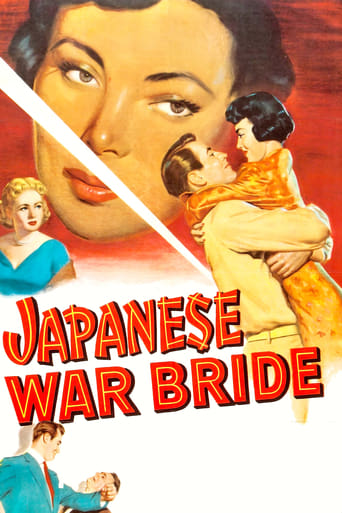
Yoshiko Yamaguchi

Yoshiko Yamaguchi

Actor

Born: February 12, 1920 in Fushun, Liaoning, China Died: September 7, 2014 Active: 1938-1958 (entertainment), 1974-1992 (politics) Birth Name: Yoshiko Yamaguchi (山口 淑子)

About Yoshiko Yamaguchi

Yoshiko Yamaguchi (1920-2014) was a Japanese actress and singer who achieved enormous fame in China during the 1930s and 1940s under the Chinese name Li Xianglan. Born to Japanese parents in Manchuria, she was raised bilingual and presented as Chinese to audiences, becoming one of the Seven Great Singing Stars of the Republic of China. After World War II, she revealed her true Japanese identity and faced controversy, leading to a brief imprisonment. She later had a Hollywood career using the name Shirley Yamaguchi, appearing in films like 'Japanese War Bride' (1952). Following her entertainment career, she became a journalist and television personality, eventually serving as a member of Japan's House of Councillors from 1974-1992. Her complex life story bridged cultures and reflected the turbulent political landscape of mid-20th century East Asia.

The Craft

On Screen

Known for her ethereal screen presence and melodious singing voice, Yamaguchi specialized in playing gentle, romantic heroines in Chinese films. Her performances were characterized by a delicate balance of traditional femininity and modern sensibility, making her particularly effective in musical dramas and romantic films. In her Hollywood roles, she brought a subtle, nuanced approach to portraying Japanese characters, avoiding stereotypes of the era.

Milestones

  • Became major star in China as Li Xianglan
  • Appeared in Hollywood films as Shirley Yamaguchi
  • Became Japanese television personality
  • Served in Japanese parliament
  • Published autobiography
  • Advocate for Japan-China relations

Best Known For

Iconic Roles

  • Chinese film heroine Li Xianglan
  • Tae in 'Japanese War Bride' (1952)
  • Various roles in Manchurian Film Association productions

Must-See Films

  • Chinese Nights
  • Japanese War Bride
  • House of Bamboo
  • China Girl
  • ],
  • awards
  • nominations
  • honors
  • personalLife
  • Yamaguchi's personal life was as complex as her professional career, marked by multiple marriages and cultural transitions. She married American sculptor Nello O. Campon in 1947, which ended in divorce. In 1958, she married Japanese diplomat Hiroaki Otaka, with whom she had a son. Her final marriage was to Japanese industrialist Shoji Watanabe in 1975. Throughout her life, she maintained deep connections to both Chinese and Japanese culture, often acting as a bridge between the two nations.
  • spouses
  • children
  • education
  • Beijing Yuying School, studied music and languages intensively from childhood, fluent in Mandarin, Japanese, and English
  • studioAffiliations
  • frequentCollaborators
  • mentors
  • protégés
  • culturalImpact
  • Yoshiko Yamaguchi's impact transcended cinema, becoming a cultural phenomenon that reflected and shaped Japan-China relations during the 20th century. As Li Xianglan, she created a unique cultural bridge between Japanese and Chinese entertainment, introducing Japanese film techniques to Chinese cinema while popularizing Chinese music among Japanese audiences. Her later revelation of her true Japanese identity sparked important discussions about cultural authenticity and the politics of representation during wartime. In Hollywood, she was one of the few Asian actresses of her era to avoid stereotypical roles, paving the way for more nuanced Asian representation in American cinema.
  • legacy
  • Yamaguchi's legacy is multifaceted, encompassing her contributions to cinema, music, politics, and international relations. She is remembered as a pioneering figure who navigated complex cultural and political boundaries with grace and intelligence. Her autobiography and numerous biographies have cemented her status as a historical figure whose life story illuminates the complex relationship between Japan and China. As a politician, she advocated for better Japan-China relations and women's rights. Her influence continues to be studied in academic contexts examining cultural hybridity, identity politics, and the role of entertainment in international relations.
  • influence
  • Yamaguchi influenced subsequent generations of Asian performers in both Eastern and Western cinema, demonstrating the possibility of cross-cultural stardom. Her ability to seamlessly transition between different cultural contexts inspired later Asian actors seeking international careers. In politics, she became a role model for women in Japanese public life, showing that entertainment figures could successfully transition to political leadership. Her diplomatic approach to Japan-China relations influenced later generations of politicians seeking to improve bilateral ties.
  • trivia
  • famousQuotes
  • controversies
  • Yamaguchi's career was marked by significant controversy, primarily surrounding her hidden Japanese identity while portraying Chinese characters during the Japanese occupation of China. After WWII, she faced accusations of being a cultural collaborator with Japanese imperialism, though she argued she was an entertainer, not a political figure. Her brief imprisonment by Chinese authorities after the war sparked international debate. Later in life, some critics questioned her political positions and whether her entertainment career had been used for propaganda purposes, though she maintained she was always an artist first.
  • externalLinks
  • faq

Films

1 film