Jenny Jugo
Actor
Born: June 14, 1904 in Mürzzuschlag, Austria-Hungary Died: September 30, 2001 Active: 1925-1950 Birth Name: Eugenie Anna Walter
About Jenny Jugo
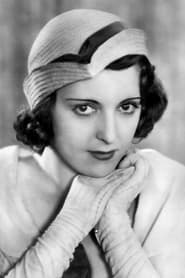
Jenny Jugo was a prominent Austrian actress who rose to fame during the silent era and became one of Germany's most beloved comedy stars of the 1930s. Born Eugenie Anna Walter in Mürzzuschlag, she moved to Berlin at the age of 18 following a brief marriage to actor Emo Jugo, whose surname she adopted as her stage name. After being discovered by producer Erich Pommer and signed to a contract with UFA in 1924, she initially struggled in dramatic roles before finding her niche in lighthearted comedies. Her career reached new heights through her collaboration with director Erich Engel, where she perfected the persona of a modern, assertive, and spirited young woman. Despite her close social ties to the Nazi elite, including Joseph Goebbels, she maintained a level of artistic integrity that allowed her to remain popular with audiences. Following World War II, she appeared in only a few films before retiring to a farm in Bavaria in 1950. Her later life was marked by tragedy when a medical error in 1975 left her confined to a wheelchair, leading her to live in total seclusion until her death at the age of 97.
The Craft
On Screen
Initially cast in dramatic and 'vamp' roles which did not suit her, Jugo eventually developed a signature style defined by charm, wit, and a 'bouncy' energy. She was known for portraying modern, self-confident, and often cheeky women who navigated social complications with humor. Her performances were characterized by naturalism and a comedic timing that made her a favorite of the 'New Objectivity' (Neue Sachlichkeit) movement in German cinema.
Milestones
- Signed a major three-year contract with UFA in 1924
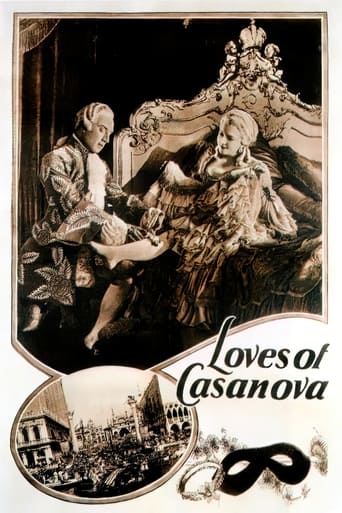
- Starred in the prestigious international co-production 'The Loves of Casanova' (1927)
- Successfully transitioned to sound film, becoming a leading lady of German film comedy
- Formed a highly successful creative partnership with director Erich Engel
- Received the Filmband in Gold (German Film Award) for Lifetime Achievement in 1971
Best Known For
Iconic Roles
Must-See Films
Accolades
Won
- German Film Award (Filmband in Gold) for Lifetime Achievement (1971)
Special Recognition
- Included in the 'Gottbegnadeten-Liste' (God-gifted list) of essential artists in 1944
- Subject of various retrospectives in German film museums
Working Relationships
Worked Often With
Studios
Why They Matter
Impact on Culture
Jenny Jugo represented the 'New Woman' of the Weimar Republic—independent, stylish, and capable. Her transition from the silent era to the 'Golden Age' of German sound comedy helped define the genre's sophisticated yet accessible tone. She was one of the few stars who managed to maintain a high level of popularity across three distinct political eras of German history (Weimar, Nazi, and post-war).
Lasting Legacy
She is remembered as one of the most talented comediennes in the history of German-speaking cinema. Her work with Erich Engel, particularly 'Pygmalion', remains a benchmark for literary adaptations of the era. Despite her withdrawal from the public eye, her films continue to be studied for their depiction of gender roles and social dynamics in mid-20th century Europe.
Who They Inspired
Her naturalistic approach to comedy influenced subsequent generations of German actresses, moving away from the theatricality of the early silent era toward a more relatable, cinematic presence.
Off Screen
Jugo married actor Emo Jugo at age 16, but the marriage lasted only a year. She later had a long-term relationship and eventually married actor Friedrich Benfer in 1950, though they had been frequent co-stars since the late 1920s. In the 1940s, she was romantically involved with producer Eberhard Klagemann. After a botched medical treatment in 1975, she became a recluse on her estate, the Jagerhof, in Upper Bavaria.
Education
Attended a convent school (Klosterschule) in Graz, Austria.
Family
- Emo Jugo (1921-1922)
- Friedrich Benfer (1950-1957, remarried later in life)
Did You Know?
- She kept her first husband's name, Jugo, as her stage name for her entire career despite their marriage lasting only one year.
- She was a close personal friend of Joseph Goebbels and his wife Magda, often visiting their home.
- After 1950, she refused all interviews and photographs, maintaining a Greta Garbo-like mystery.
- She was an avid collector of paintings by the French artist Maurice Utrillo.
- A medical malpractice incident involving a naturopath in 1975 left her paraplegic.
- She appeared in over 50 films between 1925 and 1950.
In Their Own Words
I never wanted to be a 'vamp'. I always felt more comfortable in trousers and a simple shirt. (On her early career image)
The camera is a mirror that doesn't just show the face, but the soul. (Reflecting on her acting technique)
Frequently Asked Questions
Who was Jenny Jugo?
Jenny Jugo was a famous Austrian-born actress who became a major star of German cinema, particularly known for her comedic roles in the 1930s. She began her career in silent films and successfully transitioned to sound, becoming one of the most popular leading ladies of her time.
What films is Jenny Jugo best known for?
She is best known for 'The Loves of Casanova' (1927), the social satire 'The Trousers' (1927), and her celebrated performance as Eliza Doolittle in 'Pygmalion' (1935). Her frequent collaborations with director Erich Engel are considered the highlights of her filmography.
When was Jenny Jugo born and when did she die?
Jenny Jugo was born on June 14, 1904, in Mürzzuschlag, Austria, and died on September 30, 2001, in Königsdorf, Germany, at the age of 97.
What awards did Jenny Jugo win?
Her most significant honor was the Filmband in Gold (German Film Award) for Lifetime Achievement, which she received in 1971 for her outstanding contributions to German cinema.
What was Jenny Jugo's acting style?
She was known for a natural, spirited, and modern acting style. Unlike many of her contemporaries who focused on dramatic 'vamp' roles, Jugo excelled at playing assertive, witty, and charming characters in light comedies.
Learn More
Films
1 film