Adolf Wahlmann
Actor
Born: December 10, 1876 in Koblenz-Ehrenbreitstein, Germany Died: November 1, 1956 Active: 1945
About Adolf Wahlmann
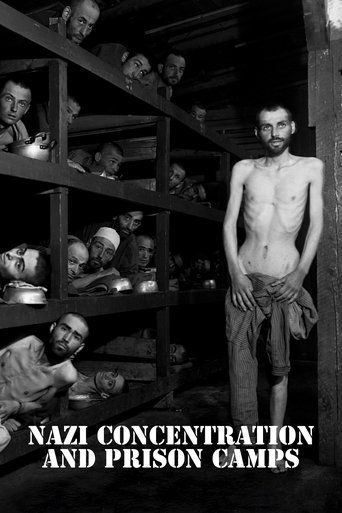
Adolf Wahlmann was a German psychiatrist and physician whose 'acting' career is defined solely by his appearance as himself in the 1945 documentary 'Nazi Concentration Camps.' Born in 1876, he spent decades working in various state mental institutions, including Weilmünster and Eichberg, before becoming the chief physician at the Hadamar Euthanasia Centre in 1942. During his tenure at Hadamar, he oversaw the systematic murder of over 4,400 patients through lethal injections, drug overdoses, and deliberate starvation as part of the Nazi 'euthanasia' program. Following the liberation of the facility by U.S. forces in March 1945, Wahlmann was interrogated on camera, providing the chilling footage used in the Allied documentary produced for the Nuremberg Trials. He was subsequently tried by a U.S. military tribunal in the Hadamar Trial of October 1945 and later by a German court in 1947. Although initially sentenced to death in the second trial, his sentence was commuted to life imprisonment, and he was eventually pardoned in 1953 due to his advanced age. He lived his final years in Michelfeld, where he died in 1956.
The Craft
On Screen
Non-professional; appeared as himself in documentary footage and interrogation sequences.
Milestones
- Appeared as himself in the landmark documentary 'Nazi Concentration Camps' (1945)
- Chief Physician of the Hadamar Institute from 1942 to 1945
- Subject of the first mass atrocity trial in the U.S. zone of Germany (The Hadamar Trial)
- Interrogated by U.S. Army Signal Corps cameramen, documenting war crimes on film
Best Known For
Iconic Roles
Must-See Films
Working Relationships
Worked Often With
Studios
Why They Matter
Impact on Culture
Adolf Wahlmann's presence in 'Nazi Concentration Camps' served as a pivotal moment in the history of documentary film and international law. The footage of his interrogation and the exhumations at Hadamar provided the first visual evidence of the Nazi 'euthanasia' program to a global audience. This filmic evidence was instrumental during the Nuremberg Trials, marking one of the first instances where motion pictures were used as primary legal evidence in a court of law to prosecute crimes against humanity.
Lasting Legacy
His legacy is inextricably linked to the horrors of the Holocaust and the development of medical ethics. He remains a central figure in the study of the T4 program and the Hadamar Trial. The footage of Wahlmann is preserved in the National Archives and the U.S. Holocaust Memorial Museum as a permanent record of the atrocities committed under the guise of medical care.
Who They Inspired
While not an actor in the traditional sense, his 'performance' as a defiant or compliant captive in documentary footage influenced the way war criminals were portrayed in post-war cinema and newsreels, emphasizing the 'banality of evil.'
Off Screen
Wahlmann was a member of the Nazi Party (NSDAP) and the SS. During his trial, he claimed to be a devout Christian and a leader of a church choir, often using his interest in music as a defense to suggest he was not politically motivated.
Education
Studied medicine at the universities of Gießen, Marburg, Erlangen, and Kiel; received his medical doctorate in 1903.
Did You Know?
- Wahlmann was nearly 70 years old at the time of his trial in 1945.
- He was the only defendant in the first Hadamar Trial to receive a life sentence instead of death, due to his age.
- The film 'Nazi Concentration Camps' was directed by George Stevens, who later became a famous Hollywood director of 'Shane' and 'Giant.'
- Wahlmann claimed he joined the Nazi Party only because 'everyone else did' and preferred spending time with his church choir.
- He was responsible for the deaths of approximately 4,422 people during his time at Hadamar.
In Their Own Words
I was as much a musician as a doctor. (Context: His defense during the Hadamar Trial regarding his character and lack of political zeal.)
Frequently Asked Questions
Who was Adolf Wahlmann?
Adolf Wahlmann was a German psychiatrist who served as the chief physician at the Hadamar Euthanasia Centre during World War II. He is known in cinema history for his appearance as himself in the 1945 documentary 'Nazi Concentration Camps,' which documented his interrogation and the crimes committed at the facility.
What films is Adolf Wahlmann best known for?
He is exclusively known for the 1945 documentary 'Nazi Concentration Camps.' This film was compiled by the U.S. military to serve as evidence of war crimes during the Nuremberg Trials.
When was Adolf Wahlmann born and when did he die?
Adolf Wahlmann was born on December 10, 1876, in Koblenz-Ehrenbreitstein, Germany, and died on November 1, 1956, in Michelfeld, Germany.
What awards did Adolf Wahlmann win?
Wahlmann did not win any awards; he was a medical doctor and a convicted war criminal, not a professional actor.
What was Adolf Wahlmann's role in the 'euthanasia' program?
As the chief medical officer at Hadamar, Wahlmann oversaw the killing of thousands of patients deemed 'unworthy of life' by the Nazi regime, using methods such as starvation and lethal medication overdoses.
Learn More
Films
1 film