Kurt Kasznar
Actor
Born: August 12, 1913 in Vienna, Austria-Hungary Died: August 6, 1979 Active: 1924-1978 Birth Name: Kurt Serwischer
About Kurt Kasznar
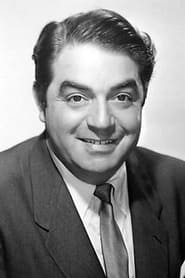
Kurt Kasznar was a versatile and highly respected character actor of the stage and screen, known for his robust presence and impeccable European charm. Born Kurt Serwischer in Vienna, he was a child prodigy on the piano before turning his attention to the theater, eventually training under the legendary Max Reinhardt. After immigrating to the United States in the late 1930s to escape the rising tide of Nazism, he served in the U.S. Army during World War II as a cinematographer, capturing historic footage of the Japanese surrender aboard the USS Missouri. His Broadway career flourished in the post-war era, most notably originating the role of Uncle Max in the original 1959 production of 'The Sound of Music.' In Hollywood, he became a staple of MGM's Golden Age, often cast as the sophisticated, slightly eccentric, or warm-hearted European friend in high-profile technicolor productions. Throughout the 1950s and 60s, he transitioned seamlessly between heavy dramatic roles and lighthearted musical comedies, maintaining a reputation as one of the industry's most reliable and charismatic supporting players.
The Craft
On Screen
Kasznar was celebrated for his 'Continental' acting style, characterized by a sophisticated blend of warmth, wit, and a slightly pompous but lovable gravitas. He possessed a resonant, melodic voice and a mastery of timing that allowed him to steal scenes from leading men without overshadowing the narrative. His technique was rooted in the classical European tradition of Max Reinhardt, emphasizing physical presence and a deep psychological understanding of 'type' characters, which he elevated beyond mere caricatures.
Milestones
- Featured in Max Reinhardt's 'The Eternal Road' in 1937
- Served as a combat cinematographer during WWII, filming the Japanese surrender
- Signed a long-term contract with MGM in the early 1950s
- Originated the role of Max Detweiler in the Broadway production of 'The Sound of Music' (1959)
- Starred as Alexander Fitzhugh in the cult classic sci-fi series 'Land of the Giants' (1968-1970)
- Received a Tony Award nomination for his performance in 'The Happy Time' (1952)
Best Known For
Iconic Roles
Must-See Films
Accolades
Won
- Milton Berle 'Man of the Year' Award (1950s)
- Bronze Star for military service during WWII
Nominated
- Tony Award for Best Featured Actor in a Play for 'The Happy Time' (1952)
Special Recognition
- Recognized as a premier interpreter of Max Reinhardt's theatrical methods
- Legacy inclusion in the Museum of Television & Radio for his work in early teleplays
Working Relationships
Worked Often With
Studios
Why They Matter
Impact on Culture
Kurt Kasznar represented the influx of European intellectualism and artistic refinement that reshaped American theater and film during the mid-20th century. By bringing a genuine Viennese sensibility to Hollywood, he helped move the 'foreigner' archetype away from slapstick toward a more nuanced, worldly, and empathetic portrayal. His presence in major MGM musicals helped define the 'sophisticated comedy' subgenre of the 1950s.
Lasting Legacy
Kasznar is remembered as one of the quintessential character actors of the 1950s, a man who could bridge the gap between high-brow Broadway drama and popular Hollywood entertainment. His contribution to the original 'Sound of Music' cast remains a touchstone for musical theater history, and his late-career turn in 'Land of the Giants' earned him a permanent place in the pantheon of science fiction television icons.
Who They Inspired
He influenced a generation of character actors by demonstrating how to maintain a distinct ethnic identity on screen while avoiding the pitfalls of being pigeonholed into villainous roles, instead finding the humanity and humor in the 'outsider' figure.
Off Screen
Kasznar was married twice. His first marriage was to Cornelia Woolley, a wealthy American heiress, in 1939; she tragically passed away in 1948. In 1950, he married the actress Leora Dana, though the couple eventually divorced in 1958. He was known in Hollywood circles as a gourmet cook, a skilled musician, and a highly cultured individual who spoke several languages fluently.
Education
Trained at the Max Reinhardt Seminar in Vienna
Family
- Cornelia Woolley (1939-1948)
- Leora Dana (1950-1958)
Did You Know?
- He was the first person to film the signing of the Japanese peace treaty at the end of WWII.
- He wrote a play titled 'First Cousin' while serving in the Army.
- He was an accomplished pianist and often entertained fellow cast members on set.
- His name is often misspelled as 'Kaszner' in early billing.
- He appeared in the very first US production of Samuel Beckett's 'Waiting for Godot' on Broadway.
- He was a close friend of actress Elizabeth Taylor, appearing with her in multiple films.
- He died of cancer just six days before his 66th birthday.
In Their Own Words
On his role in 'Land of the Giants': 'In this business, you spend half your life waiting for the phone to ring and the other half wishing you hadn't answered it—unless the role is as fun as Fitzhugh.'
Regarding his transition to America: 'I came with a suitcase and a piano in my head; the theater gave me the rest.'
Frequently Asked Questions
Who was Kurt Kasznar?
Kurt Kasznar was a prominent Austrian-American character actor known for his work in Golden Age Hollywood films and Broadway musicals. He is best remembered for his roles in 'Lili', 'Kiss Me Kate', and as the original Max Detweiler in 'The Sound of Music'.
What films is Kurt Kasznar best known for?
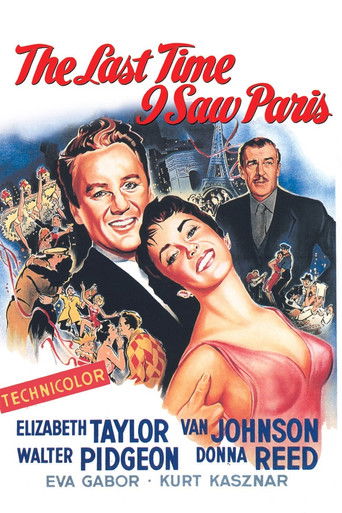
He is best known for 'The Last Time I Saw Paris' (1954), the musical 'Lili' (1953), 'Kiss Me Kate' (1953), and the 1957 adaptation of 'A Farewell to Arms'.
When was Kurt Kasznar born and when did he die?
He was born on August 12, 1913, in Vienna, Austria, and passed away on August 6, 1979, in Santa Monica, California.
What awards did Kurt Kasznar win?
While he did not win an Oscar, he was nominated for a Tony Award in 1952 for 'The Happy Time' and received military honors for his work as a cinematographer during World War II.
What was Kurt Kasznar's acting style?
He was known for a 'Continental' style that combined European sophistication with warmth and comedic timing, often playing worldly, intellectual, or jovial supporting characters.
Learn More
Films
1 film