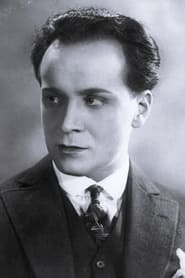
Walter Rilla
Actor
Born: August 22, 1894 in Neunkirchen, German Empire Died: November 21, 1980 Active: 1922-1977 Birth Name: Walter Wilhelm Karl Ernst Rilla
About Walter Rilla
Walter Rilla was a distinguished German actor and filmmaker whose career spanned over five decades and multiple continents. Born Walter Wilhelm Karl Ernst Rilla in Neunkirchen, he began his artistic journey as a journalist and theater critic before transitioning to the stage and silent cinema in the early 1920s. His early German career was marked by collaborations with legendary directors like F.W. Murnau and Reinhold Schünzel, establishing him as a versatile character actor. Due to his Jewish heritage and the rise of the Nazi regime, Rilla fled to London in 1934, where he successfully rebuilt his career in British cinema, often portraying sophisticated aristocrats or menacing foreign agents. During World War II, he became a staple of British propaganda and espionage films, frequently cast as German officers. In the post-war era, he returned to West Germany, where he expanded his repertoire to include writing and directing for television while continuing to appear in international film productions until the late 1970s.
The Craft
On Screen
Rilla was known for his sophisticated and intellectual screen presence, often bringing a sense of gravitas and quiet intensity to his roles. In his youth, he frequently played 'intelligent young men' and romantic leads, but as he matured, he became a master of the 'distinguished gentleman' archetype. His ability to project both aristocratic elegance and cold, calculating menace made him a favorite for complex villainous roles in espionage thrillers.
Milestones
- Debuted in the silent era with 'Hannele's Journey to Heaven' (1922)
- Starred in F.W. Murnau's rare comedy 'The Grand Duke's Finances' (1924)
- Successfully transitioned to British cinema in the mid-1930s with 'The Scarlet Pimpernel'
- Became a prominent character actor in British wartime cinema
- Returned to Germany in the 1950s to become a prolific television director and writer
- Appeared in the iconic Dr. Mabuse film series in the 1960s
Best Known For
Iconic Roles
Must-See Films
Accolades
Won
- Deutscher Filmpreis (German Film Award) - Honorary Award for Outstanding Contributions to German Cinema
Special Recognition
- Recognized as a significant figure in the 'Exilfilm' (Exile Film) community of German artists who fled the Third Reich
Working Relationships
Worked Often With
Studios
Why They Matter
Impact on Culture
Walter Rilla serves as a poignant example of the 'lost generation' of German Jewish artists who were forced to recreate their identities in foreign lands. His ability to seamlessly integrate into British cinema while maintaining his German roots allowed him to act as a cultural bridge during and after the war. He contributed significantly to the 'continental' flavor of British Golden Age cinema, providing a level of authenticity to European characters that was often missing in Hollywood productions of the same era.
Lasting Legacy
Rilla's legacy is defined by his resilience and longevity, successfully navigating the transition from silent film to talkies, and from German expressionism to British realism. He is remembered as one of the most reliable and talented character actors of the mid-20th century. His work in the Dr. Mabuse and Edgar Wallace films of the 1960s ensured his popularity with a new generation of filmgoers, cementing his status as a versatile performer who could adapt to changing cinematic trends.
Who They Inspired
He influenced the portrayal of the 'sophisticated villain' in British cinema, moving away from caricatures toward more nuanced, psychologically grounded performances. His son Wolf Rilla's successful directing career is also a direct extension of Walter's artistic influence and mentorship.
Off Screen
Walter Rilla was of Jewish descent, which necessitated his flight from Germany following the Nazi rise to power. He was married to Theresa Klausner, and the couple had a son, Wolf Rilla, who followed in his father's footsteps to become a noted film director (best known for 'Village of the Damned'). Rilla was deeply intellectual, having studied at the University of Königsberg and maintaining an interest in art and literature throughout his life.
Education
University of Königsberg (studied literature and philosophy)
Family
- Theresa Klausner
Did You Know?
- Rilla started an art journal in the early 1920s that featured contributions from Bertolt Brecht.
- He was originally cast in 'Twist of Fate' (1954) but quit ten days into filming and was replaced by Stanley Baker.
- He spoke fluent English, which allowed him to transition to British films much more easily than many of his contemporaries.
- Despite playing many Nazi officers during the war, he was himself a refugee from the Nazi regime.
- He directed his last television project just a few years before his death at age 86.
- His film debut was as the 'Angel of Death' in a 1922 silent film.
In Their Own Words
Acting is not about being someone else; it is about finding the truth of a character within yourself.
Frequently Asked Questions
Who was Walter Rilla?
Walter Rilla was a prominent German-born actor and director who had a prolific career in both German and British cinema. He is best known for his transition from silent films in Germany to becoming a respected character actor in the UK after fleeing the Nazi regime.
What films is Walter Rilla best known for?
He is widely recognized for his roles in the silent classic 'The Grand Duke's Finances' (1924), the adventure 'The Scarlet Pimpernel' (1934), and later 1960s films like 'The Face of Fu Manchu' and the 'Dr. Mabuse' series.
When was Walter Rilla born and when did he die?
Walter Rilla was born on August 22, 1894, in Neunkirchen, Germany, and passed away on November 21, 1980, in Rosenheim, West Germany, at the age of 86.
Why did Walter Rilla move to England?
Rilla moved to London in 1934 because he was of Jewish descent and faced increasing persecution and professional bans under the rising Nazi government in Germany.
What was Walter Rilla's acting style?
Rilla was known for a sophisticated, understated acting style, often portraying aristocratic, intellectual, or authoritative figures with a mix of elegance and gravitas.
Was Walter Rilla related to director Wolf Rilla?
Yes, Walter Rilla was the father of Wolf Rilla, the director famous for the 1960 sci-fi classic 'Village of the Damned'. Walter even appeared in some of his son's films, such as 'Cairo' (1963).
Learn More
Films
2 films
