
Raphail Gikov
Director
Born: September 2, 1905 in Kharkiv, Russian Empire (now Ukraine) Died: July 17, 1946 Active: 1924-1946 Birth Name: Raphail Borisovich Gikov
About Raphail Gikov
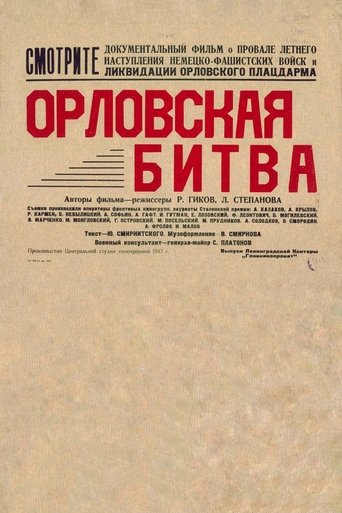
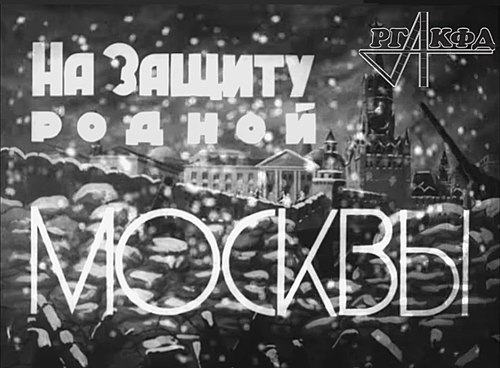
Raphail Borisovich Gikov was a prominent Soviet documentary filmmaker and cinematographer whose career was tragically cut short by his early death. Born in Kharkiv in 1905, he began his journey in cinema as a young man in Crimea, where he worked as a photographer and bit-part actor at the Yalta film factory. He pursued a rigorous formal education, graduating from the State Institute of Cinematography (VGIK) in 1929 and concurrently earning a degree in literature and art from Moscow State University in 1930. Gikov became a cornerstone of the Central Studio for Documentary Film (CSDF), transitioning from a skilled cameraman to a director in 1932. During World War II, he served as a frontline correspondent and head of film groups for the Western, Bryansk, and 2nd Baltic Fronts, capturing some of the most harrowing and significant footage of the conflict. His work on the 'To Protect Native Moscow' newsreels and the feature 'Battle of Oryol' remains essential historical documentation of the Soviet war effort. Despite his contributions, he was dismissed from the studio in early 1946 under controversial circumstances and passed away just months later at the age of 40.
The Craft
Behind the Camera
Gikov was a master of the 'film-chronicle' (kinokhronika) style, characterized by a blend of raw, observational realism and structured narrative propaganda. His work focused on the human element within massive industrial or military efforts, often using dynamic editing and close-ups of workers and soldiers to personalize the Soviet state's achievements. As a director-operator, he maintained a high level of technical precision even under the extreme conditions of the front lines.
Milestones
- Head of frontline film groups during World War II (1941-1945)
- Directed the influential newsreel series 'To Protect Native Moscow' (1941)
- Co-directed the major documentary 'Battle of Oryol' (1943)
- Served as Head of the Newsreel Department at VGIK (1932-1940)
- Captured the signing of the Declaration of the Defeat of Germany (1945)
Best Known For
Must-See Films
Accolades
Won
- Order of the Patriotic War, 2nd Class (1944)
- Order of the Patriotic War, 2nd Class (1945)
- Order of the Red Star (1943)
- Medal 'For the Victory over Germany in the Great Patriotic War 1941–1945' (1945)
- Medal 'For the Victory over Japan' (1945)
Special Recognition
- Member of the Communist Party of the Soviet Union (VKP(b)) since 1942
- Associate Professor at VGIK
Working Relationships
Worked Often With
Studios
Why They Matter
Impact on Culture
Raphail Gikov played a vital role in shaping the visual language of Soviet wartime reporting. His work on the 'To Protect Native Moscow' series provided a morale-boosting narrative during the darkest days of the Nazi invasion, blending urgent news with cinematic artistry. By teaching at VGIK, he influenced a generation of Soviet cameramen, instilling a standard of technical excellence and ideological commitment that defined the era's documentary output.
Lasting Legacy
Gikov's legacy is preserved in the Russian State Archive of Movie and Photo Documents (RGAKFD). His footage of the Battle of Moscow and the liberation of the Baltic states remains some of the most frequently used historical material in documentaries about World War II. He is remembered as a 'soldier with a camera' who risked his life to ensure that the reality of the front was recorded for posterity.
Who They Inspired
His dual expertise in literature and cinematography allowed him to influence the structure of the Soviet newsreel, moving it toward a more cohesive, story-driven format that influenced later documentary filmmakers like Roman Karmen.
Off Screen
Gikov was born into a Jewish family in Kharkiv. He was married to Lidiya Ilyinichna Stepanova (1899–1962), who was herself a distinguished director of documentary and popular science films and a frequent collaborator on his projects.
Education
State Institute of Cinematography (VGIK), Camera Department (1929); Moscow State University (MSU), Faculty of Literature and Art (1930).
Family
- Lidiya Stepanova
Did You Know?
- Gikov began his career as a 'wandering photographer' after leaving school at age 14.
- He was one of the 160 cameramen who participated in the massive 'A Day of War' project in June 1942.
- He was dismissed from the Central Studio for Documentary Film in February 1946 for 'misuse of official position,' a common pretext during political purges of that era.
- He died only five months after his dismissal from the studio at the age of 40.
- He is buried at the New Donskoy Cemetery in Moscow.
- During the 1930s, he was a key figure in documenting the construction of the Moscow-Volga Canal.
In Their Own Words
The lens, it seemed to us, did not love the earth. The flat Central Russian plain... we thought, 'No, this is not for cinema.' (Reflecting on the challenges of filming the Moscow-Volga canal construction).
Frequently Asked Questions
Who was Raphail Gikov?
Raphail Gikov was a prominent Soviet documentary film director and cinematographer active during the 1930s and 1940s. He is best known for his work as a frontline cameraman and director during World War II, capturing pivotal moments of the Soviet defense and counter-offensive.
What films is Raphail Gikov best known for?
He is most famous for directing the newsreel series 'To Protect Native Moscow' (1941) and the feature-length documentaries 'Battle of Oryol' (1943) and 'The Defeat of Japan' (1945).
When was Raphail Gikov born and when did he die?
He was born on September 2, 1905, in Kharkiv and died on July 17, 1946, in Moscow at the age of 40.
What awards did Raphail Gikov win?
Gikov was highly decorated for his wartime service, receiving the Order of the Patriotic War (twice), the Order of the Red Star, and medals for the victories over Germany and Japan.
What was Raphail Gikov's directing style?
His style was rooted in the Soviet tradition of 'kinokhronika,' combining stark documentary realism with a literary narrative structure, often focusing on the collective heroism of the Soviet people.
Learn More
Films
2 films