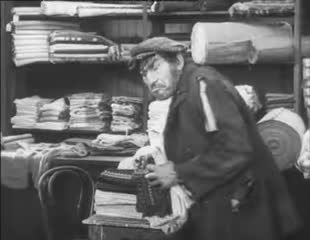
Eugen Skjønberg
Actor
Born: March 27, 1889 in Kragerø, Norway Died: July 25, 1971 Active: 1914-1962 Birth Name: Conrad Eugen Skjønberg
About Eugen Skjønberg
Conrad Eugen Skjønberg was a distinguished Norwegian stage and film actor whose career spanned over five decades of the 20th century. Born in Kragerø, he initially pursued a career in banking before his natural talent for performance was discovered by a dance teacher during an amateur theater production. This discovery led him to train under the tutelage of Sophie Reimers and receive vocal lessons from Maja Flagstad, eventually making his professional debut in 1914 at the Stavanger Permanent Theater. Throughout the silent era and into the Golden Age of Norwegian cinema, Skjønberg became a fixture of the National Theatre and the Oslo New Theater, where he was celebrated for his versatility in both dramatic and comedic roles. He was a pioneer of early Norwegian film, starring in silent classics like 'Iron Wills' (1923) and 'Himmeluret' (1925), and successfully transitioned to sound films, appearing in nearly 30 productions. Beyond his individual success, he founded one of Norway's most prominent acting dynasties, with his wife Henny and sons Pål and Espen all becoming legendary figures in the nation's cultural history.
The Craft
On Screen
Skjønberg was known for a grounded and naturalistic acting style that bridged the gap between the expressive requirements of the silent screen and the psychological depth of modern theater. His early training in opera and classical theater gave him a commanding vocal presence, which made him a favorite for NRK's Radio Theater in his later years. On film, he often portrayed authoritative yet human figures, ranging from stern fathers to reliable community leaders, characterized by a subtle use of facial expressions.
Milestones
- Professional stage debut as Johan Tønnessen in Ibsen's 'The Pillars of Society' (1914)
- Leading role as Ove Rolandsen in the silent film 'Iron Wills' (1923)
- Long-term residency at the National Theatre in Oslo (1920–1924)
- Founding member and staple actor of the Oslo New Theater (Det Nye Teater) from 1929
- Awarded the King's Medal of Merit in Gold (1959) for his contributions to Norwegian arts
- Featured in the controversial and initially banned film 'To mistenkelige personer' (1950)
Best Known For
Iconic Roles
Must-See Films
Accolades
Won
- King's Medal of Merit in Gold (Kongens fortjenstmedalje i gull) (1959)
Special Recognition
- Honorary member of the Norwegian Actors' Equity Association
- Recognized as a patriarch of the 'Skjønberg acting dynasty' in Norwegian cultural history
Working Relationships
Worked Often With
Studios
Why They Matter
Impact on Culture
Eugen Skjønberg played a vital role in the professionalization of Norwegian cinema during its formative years. By bringing his rigorous theatrical training to the silent screen, he helped elevate the medium from mere spectacle to a respected art form in Scandinavia. His work in the 1920s and 30s provided a foundation for the 'Golden Age' of Norwegian film that followed World War II. Furthermore, his presence in early radio dramas helped establish the NRK Radio Theater as a primary cultural institution for the Norwegian public.
Lasting Legacy
Skjønberg's legacy is twofold: his extensive body of work in nearly 30 films and his role as the progenitor of the Skjønberg acting lineage. He is remembered as a versatile performer who could handle the slapstick of the Chat Noir cabaret as easily as the gravitas of an Ibsen drama. In Norway, the Skjønberg name remains synonymous with acting excellence, a reputation that began with Eugen's dedication to the craft during the transition from silent to sound cinema.
Who They Inspired
He influenced a generation of Norwegian actors by demonstrating the longevity possible in a career that balanced stage, film, and the emerging medium of radio. His sons, particularly Espen Skjønberg, cited the professional environment of their upbringing as a primary influence on their own world-renowned acting techniques.
Off Screen
Eugen Skjønberg was married to the esteemed character actress Henny Skjønberg (née Bucher Eide). The couple resided at Ramstad and raised three sons, all of whom entered the arts. Their family became central to the Norwegian theatrical landscape, with their sons Pål and Espen Skjønberg becoming two of the most famous actors in the country's history. The family legacy continued into a third generation with several grandchildren also pursuing acting careers.
Education
Initially trained in banking; later received theatrical training from Sophie Reimers and vocal training from Maja Flagstad.
Family
- Henny Skjønberg (married until his death in 1971)
Did You Know?
- He was discovered by a dance teacher while performing in an amateur theater group in his early 20s.
- Before becoming an actor, he worked in the banking industry in Kragerø and Skien.
- He appeared in the film 'To mistenkelige personer', which was famously banned by the Supreme Court of Norway for decades to protect the privacy of the real-life people the story was based on.
- He was a frequent performer in the popular 'Dickie Dick Dickens' radio series in Norway.
- His career spanned the transition from silent films to black-and-white talkies and finally into the era of color cinema.
- He performed at the Trøndelag Teater for nearly a decade between 1937 and 1946.
- His wife, Henny Skjønberg, is perhaps best known for the classic film 'Tante Pose'.
In Their Own Words
It was the amateur theater that saved me from the ledgers of the bank. (Reflecting on his career change in a later interview)
The stage is a demanding mistress, but the film camera is a judge who never forgets. (Attributed context regarding his transition to screen acting)
Frequently Asked Questions
Who was Eugen Skjønberg?
Eugen Skjønberg was a prominent Norwegian actor of the stage and screen, active from the silent era through the 1960s. He is considered a foundational figure in Norwegian cinema and the patriarch of a famous acting family.
What films is Eugen Skjønberg best known for?
He is best known for his roles in the silent film 'Iron Wills' (1923), the classic 'Fant' (1937), and the family comedy 'Vi gifter oss' (1951). He also appeared in the historically significant 'To mistenkelige personer'.
When was Eugen Skjønberg born and when did he die?
He was born on March 27, 1889, in Kragerø, Norway, and passed away on July 25, 1971, in Oslo at the age of 82.
What awards did Eugen Skjønberg win?
His most notable honor was the King's Medal of Merit in Gold, which he received in 1959 for his lifelong dedication to the Norwegian arts.
What was Eugen Skjønberg's acting style?
He was known for a versatile and naturalistic approach, moving seamlessly between the physical expression of silent film and the nuanced vocal delivery required for theater and radio.
Was Eugen Skjønberg related to other famous actors?
Yes, he was the husband of actress Henny Skjønberg and the father of actors Pål and Espen Skjønberg, the latter of whom became one of Norway's most internationally recognized performers.
Learn More
Films
1 film