Nikolai Dubinskii
Actor
Born: January 20, 1911 in Saint Petersburg, Russian Empire Died: May 4, 1973 Active: 1935-1970 Birth Name: Nikolai Vyacheslavovich Dubinskii
About Nikolai Dubinskii
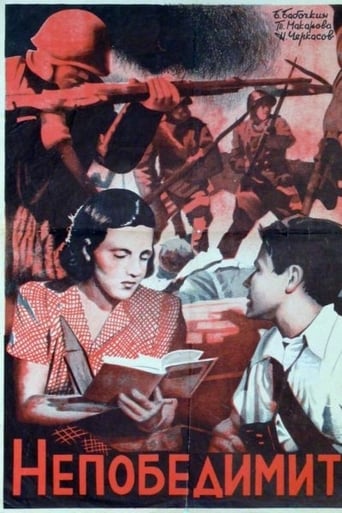
Nikolai Vyacheslavovich Dubinskii was a distinguished Soviet stage and screen actor whose career was deeply rooted in the theatrical traditions of the early 20th century. Born in 1911, he became a prominent figure in the Leningrad theater scene, specifically associated with the Red Army Theater and later the Pushkin Academic Drama Theater. His film career, while selective, is anchored by his significant role in the 1942 patriotic war drama 'The Invincible' (Nepobedimye), which was filmed during the height of World War II to bolster Soviet morale. Dubinskii was known for his ability to portray characters with a stoic, disciplined intensity, reflecting the socialist realism aesthetic prevalent during the Stalinist era. Throughout the 1940s and 1950s, he balanced his cinematic appearances with a rigorous schedule of classical stage performances, often appearing in works by Gorky and Chekhov. His contribution to the arts was recognized by the state, earning him the title of Honored Artist of the RSFSR in 1955, marking him as a significant cultural figure of the mid-century Soviet Union.
The Craft
On Screen
Dubinskii practiced a disciplined form of psychological realism, heavily influenced by the Stanislavski system. His screen presence was characterized by a 'heroic-monumental' quality, which was the standard for leading men in Soviet cinema during the 1940s. He possessed a resonant, authoritative voice and a stoic facial expression that conveyed internal strength and moral conviction, making him ideal for portraying military officers and dedicated workers.
Milestones
- Awarded the title of Honored Artist of the RSFSR in 1955
- Starring role as Vlasov in the 1942 war epic 'The Invincible'
- Long-term residency at the Leningrad Academic Drama Theater named after A.S. Pushkin
- Key performance in the 1954 film 'The Boys from Leningrad'
- Recipient of the Medal 'For the Defense of Leningrad' for his cultural service during the Siege
Best Known For
Iconic Roles
Must-See Films
Accolades
Won
- Honored Artist of the RSFSR (1955)
- Medal 'For the Defense of Leningrad' (1943)
- Medal 'For Valiant Labour in the Great Patriotic War 1941–1945' (1946)
- Order of the Badge of Honour
Special Recognition
- State recognition for cultural contributions during the Siege of Leningrad
- Commemorative plaques at the Pushkin Theater for long-standing service
Working Relationships
Worked Often With
Studios
Why They Matter
Impact on Culture
Nikolai Dubinskii served as a cultural symbol of resilience during the Great Patriotic War. His performance in 'The Invincible' was specifically designed to show the unity between the front lines and the industrial workers of Leningrad. By portraying a character who remains steadfast under the pressure of war, Dubinskii helped define the 'Soviet Hero' archetype that dominated Eastern European cinema for decades. His work in the theater also helped preserve the classical Russian acting tradition during a period of intense political transition.
Lasting Legacy
Dubinskii is remembered as a 'soldier of the arts' in Russia. His legacy is preserved through the archives of the Lenfilm studio and the Pushkin Theater (now the Alexandrinsky Theatre). While he is not as internationally famous as some of his contemporaries, he remains a vital figure in the history of Soviet wartime cinema and a respected practitioner of the Leningrad school of acting.
Who They Inspired
His stoic acting method influenced the later 'Thaw' period actors who sought to bring more nuance to the rigid heroic archetypes he helped establish. He was a bridge between the pre-war theatrical traditions and the post-war cinematic expansion.
Off Screen
Dubinskii was known to be a private individual, deeply committed to the Leningrad artistic community. He lived through the harrowing 900-day Siege of Leningrad, during which he continued to perform for soldiers and civilians to maintain public morale. He was married to a fellow theater professional, though details of his family life were rarely publicized in accordance with the norms for Soviet public figures of that era.
Education
Graduated from the Leningrad Institute of Theater, Music, and Cinematography (now the Russian State Institute of Performing Arts) in the early 1930s.
Family
- Information not publicly documented
Did You Know?
- He filmed 'The Invincible' while the city of Leningrad was under actual military siege, though some production was moved to Tashkent for safety.
- He was a recipient of one of the first 'Defense of Leningrad' medals given to civilian artists.
- Dubinskii spent nearly his entire professional life in a single city, Leningrad, despite many offers to move to Moscow.
- He was known for his extensive knowledge of classical Russian literature, which he often recited during radio broadcasts.
- His film 'The Invincible' was one of the first Soviet films to be exported to Allied countries during the war to demonstrate Soviet resolve.
In Their Own Words
The stage is not a place for vanity; it is a place for service to the people. (Regarding his work during the war)
An actor's true face is found in the silence between the lines. (In a 1950s interview regarding the Stanislavski method)
Frequently Asked Questions
Who was Nikolai Dubinskii?
Nikolai Dubinskii was a prominent Soviet actor of the mid-20th century, best known for his work in patriotic war films and his long career at the Pushkin Academic Drama Theater in Leningrad.
What films is Nikolai Dubinskii best known for?
He is most famous for the 1942 film 'The Invincible' (Nepobedimye), as well as 'The Great Force' (1950) and 'The Boys from Leningrad' (1954).
When was Nikolai Dubinskii born and when did he die?
He was born on January 20, 1911, in Saint Petersburg and passed away on May 4, 1973.
What awards did Nikolai Dubinskii win?
He was named an Honored Artist of the RSFSR in 1955 and received several state medals for his cultural contributions during World War II.
What was Nikolai Dubinskii's acting style?
He utilized a disciplined, psychological realism based on the Stanislavski system, specializing in heroic and authoritative characters with great moral weight.
Learn More
Films
1 film