Otto Lederer
Actor
Born: April 17, 1886 in Prague, Austria-Hungary (now Czech Republic) Died: September 3, 1965 Active: 1912-1933
About Otto Lederer
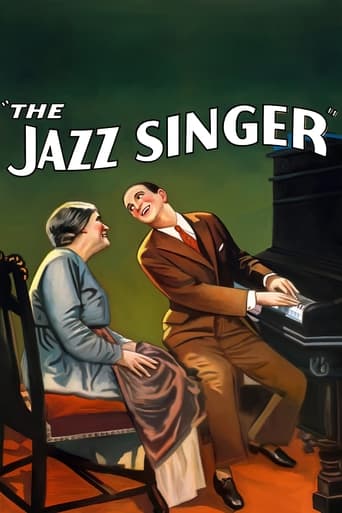
Otto Lederer was a prolific character actor of the silent era whose career spanned over 120 films between 1912 and 1933. Born in Prague, he immigrated to the United States and established himself as a versatile performer capable of handling both comedic and dramatic roles, often portraying authoritative or paternal figures. He became a staple at Vitagraph Studios during the 1910s, where he frequently appeared in short films and serials, often playing villains or eccentric characters. His most enduring contribution to cinema history came in 1927 when he was cast as Moisha Yudelson in 'The Jazz Singer,' the landmark film that signaled the end of the silent era. In this role, he provided a warm, comedic, and culturally grounded performance as the family friend of the Rabinowitz family. Despite the transition to sound, Lederer's career began to wind down in the early 1930s, though he remained a respected figure among his peers in the Hollywood community until his death in 1965.
The Craft
On Screen
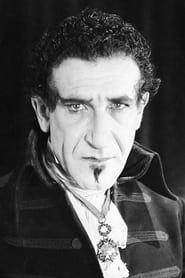
Lederer was known for a highly expressive and theatrical acting style typical of the silent era, which he tempered with a naturalistic warmth in his later character roles. He possessed a distinctive facial structure that allowed him to play a wide range of ethnicities and archetypes, from sinister villains in early serials to kindly Jewish neighbors in his sound-era work. His performance in 'The Jazz Singer' is noted for its understated comedic timing and its ability to convey deep communal ties without the need for excessive dialogue.
Milestones
- Cast in the historic first 'talkie' feature film, The Jazz Singer (1927)
- Became a primary character actor for Vitagraph Studios in the mid-1910s
- Starring role in the popular serial 'The Fighting Trail' (1917)
- Successfully transitioned from silent shorts to feature-length dramatic productions
- Portrayed iconic literary characters in early silent adaptations
Best Known For
Iconic Roles
Must-See Films
Accolades
Special Recognition
- Recognized as a pioneer of the Vitagraph Studios era
- Featured in numerous historical retrospectives regarding the birth of synchronized sound cinema
Working Relationships
Worked Often With
Studios
Why They Matter
Impact on Culture
Otto Lederer's cultural impact is inextricably linked to his participation in 'The Jazz Singer.' By playing Moisha Yudelson, he helped bring a specific, recognizable Jewish immigrant archetype to a global audience during a pivotal moment in technological history. His presence in the film provided a bridge between the traditional world of the Cantor and the modern world of Jack Robin (Al Jolson). Beyond this, his work in the 1910s serials helped define the 'cliffhanger' genre that would influence action cinema for decades.
Lasting Legacy
Lederer's legacy is that of a quintessential 'actor's actor' of the silent period. While he never achieved the top-tier stardom of a Valentino or Fairbanks, his filmography of over 100 credits serves as a roadmap for the evolution of American cinema from 10-minute shorts to epic features. He is remembered by film historians as a vital component of the transition to sound, representing the old guard of silent performers who lent their gravitas to the new medium of the 'talkie.'
Who They Inspired
He influenced the development of character acting by demonstrating how a performer could maintain a long, stable career through versatility rather than just leading-man looks. His ability to play diverse ethnic roles (though a product of its time) set a precedent for the 'character man' archetype that became a staple of the Golden Age studio system.
Off Screen
Lederer was married to the actress Gretchen Lederer (born Gretchen Fischer), who was also a prominent figure in silent films, particularly those directed by Rupert Julian. The couple was part of the early Hollywood social circle that bridged the gap between the New York-based film industry and the burgeoning California scene. After his retirement from the screen in the 1930s, Lederer lived a relatively private life in Los Angeles, maintaining ties with other veterans of the silent screen.
Education
Trained in classical theater in Europe before immigrating to the United States.
Family
- Gretchen Lederer (dates of marriage unavailable)
Did You Know?
- He appeared in the 1927 version of 'The King of Kings' directed by Cecil B. DeMille.
- Lederer was 41 years old when he appeared in 'The Jazz Singer,' though he often played older characters.
- He was one of the few actors from the silent era to have a speaking role in the first synchronized sound feature.
- His wife, Gretchen Lederer, was a major star for Universal in the 1910s.
- He often played 'The Sultan' or 'The Vizier' in early silent fantasy films due to his distinctive features.
- Lederer's career effectively ended just as the Golden Age of Hollywood was beginning, with his last credited role in 1933.
- He is buried at Forest Lawn Memorial Park in Glendale, a common resting place for Golden Age stars.
In Their Own Words
In the context of 'The Jazz Singer' (as Yudelson): 'He's a jazz singer!' (This line, delivered to the Cantor, highlights the central conflict of the film.)
Frequently Asked Questions
Who was Otto Lederer?
Otto Lederer was a prominent Austro-Hungarian-born American character actor who appeared in over 120 films during the silent and early sound eras. He is most famous for his role in the first feature-length 'talkie,' The Jazz Singer (1927).
What films is Otto Lederer best known for?
He is best known for playing Moisha Yudelson in 'The Jazz Singer' (1927). Other notable works include 'The Fighting Trail' (1917), 'The King of Kings' (1927), and 'White Eagle' (1922).
When was Otto Lederer born and when did he die?
Otto Lederer was born on April 17, 1886, in Prague, and passed away on September 3, 1965, in Los Angeles, California.
What was Otto Lederer's role in the transition to sound film?
Lederer played a crucial supporting role in 'The Jazz Singer,' the film that revolutionized the industry. His performance helped ground the movie's emotional and cultural themes, making him one of the first actors to be heard in a major motion picture.
Was Otto Lederer married to another actor?
Yes, he was married to Gretchen Lederer, a successful silent film actress who appeared in many films for Universal Pictures during the 1910s.
Learn More
Films
2 films