Frank Baldwin
Actor
Born: c. 1860s in United States Active: 1894
About Frank Baldwin
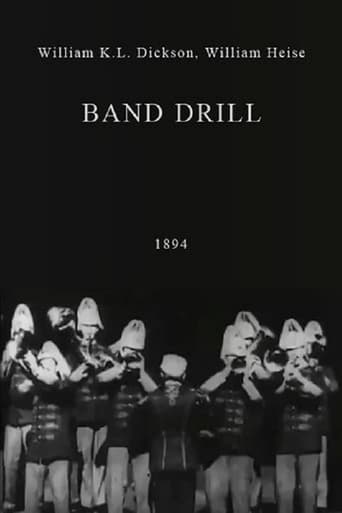
Frank Baldwin was a 19th-century American stage actor who holds a unique place in cinema history as one of the earliest performers ever captured on motion picture film. He was a member of the original Broadway cast of Charles H. Hoyt's popular musical burlesque 'A Milk White Flag,' which premiered at the Madison Square Theatre in New York on October 8, 1894. In late November of that year, Baldwin and several of his castmates traveled to Thomas Edison's 'Black Maria' studio in Orange, New Jersey, to film scenes from their stage production. Under the direction of film pioneers W.K.L. Dickson and William Heise, Baldwin performed his stage role of Steele Ayers, the bandmaster, in the short film 'Band Drill.' This production was part of a series of experimental films intended for the Edison Kinetoscope, marking one of the first instances of a Broadway performance being adapted for the screen. Though his film career was brief and tied to this specific theatrical crossover, Baldwin's appearance remains a vital artifact of the transition from traditional stagecraft to the nascent medium of motion pictures.
The Craft
On Screen
Baldwin's acting style was rooted in late 19th-century musical burlesque and vaudeville, characterized by broad, expressive gestures and physical comedy. In 'Band Drill,' he utilizes the exaggerated movements necessary for the silent, fixed-camera medium of the time to convey the authority and rhythm of a bandmaster. His performance was designed to be recognizable to audiences who had seen the stage play, emphasizing visual storytelling over the spoken word.
Milestones
- Original cast member of the Broadway musical 'A Milk White Flag' (1894)
- Featured performer in one of the earliest Edison Kinetoscope films, 'Band Drill' (1894)
- Collaborated with motion picture pioneers W.K.L. Dickson and William Heise
- Portrayed the character Steele Ayers on both stage and screen
- Participated in the first wave of theatrical-to-film adaptations in history
Best Known For
Iconic Roles
Must-See Films
Accolades
Special Recognition
- Recognized in film history as a pioneer of the Kinetoscope era
- Featured in the Library of Congress 'Edison: The Invention of the Movies' collection
Working Relationships
Worked Often With
Studios
Why They Matter
Impact on Culture
Frank Baldwin's participation in 'Band Drill' represents a critical moment in cultural history where the established world of Broadway theater first met the experimental world of cinema. By bringing a successful stage character to the Kinetoscope, Baldwin helped demonstrate the commercial potential of using known theatrical properties to attract audiences to the new medium. This set a precedent for the 'star system' and the adaptation of plays into films that would dominate the industry for decades to come.
Lasting Legacy
Baldwin's legacy is preserved in the archives of early cinema as a 'Kinetoscope pioneer.' While he did not become a film star in the modern sense, his image in 'Band Drill' serves as a primary source for historians studying the performance styles of the 1890s. He is one of the few actors from that decade whose work survives in a format that allows modern viewers to see exactly how a 19th-century stage performer moved and conducted themselves.
Who They Inspired
He influenced the early development of film acting by demonstrating how stage routines could be condensed into the short, 20-to-30-second format required by early Edison cameras. His work paved the way for other stage actors to embrace the camera as a legitimate extension of their craft.
Off Screen
Details regarding Frank Baldwin's personal life are scarce due to the era in which he lived. He was a professional actor active in the New York theatrical circuit during the 1890s, often associated with the productions of Charles H. Hoyt and manager Frank McKee.
Education
Trained in the American vaudeville and musical theater traditions of the late 19th century.
Did You Know?
- The film 'Band Drill' was shot in the famous 'Black Maria,' the world's first motion picture studio.
- Baldwin's character, Steele Ayers, was a parody of the self-important leaders of state militias.
- The film was based on a musical burlesque that ran for 153 performances on Broadway.
- Baldwin is often cited in filmographies as one of the first 'named' actors in cinema history.
- The 'Band Drill' film was essentially a promotional tool for the stage play 'A Milk White Flag.'
- He performed alongside a cast that included other early film subjects like Fred W. Boardman and Ad. Dorsch.
In Their Own Words
I should make him up as a man approaching forty-two; at any rate not older than forty-two and three months. (Context: A humorous instruction given to Baldwin by playwright Charles Hoyt regarding his character's age)
Frequently Asked Questions
Who was Frank Baldwin?
Frank Baldwin was a 19th-century stage actor best known for appearing in the 1894 Edison film 'Band Drill.' He was a member of the Broadway cast of 'A Milk White Flag' and was one of the first actors to transition a stage role to the screen.
What is Frank Baldwin's most famous film?
His most famous (and only known) film is 'Band Drill' (1894), directed by W.K.L. Dickson. In it, he plays the role of Steele Ayers, a bandmaster leading a group of musicians.
When was Frank Baldwin active in cinema?
Frank Baldwin was active during the very birth of cinema in 1894. His film work was part of the experimental Kinetoscope productions at Thomas Edison's laboratory.
What was Frank Baldwin's role in 'A Milk White Flag'?
He played the character Steele Ayers, the bandmaster. The play was a musical burlesque that satirized the state militia, and Baldwin's performance was a highlight of the production's physical comedy.
Why is Frank Baldwin important to film history?
He is important because he represents the first generation of professional actors to be recorded on film. His work helps historians understand the link between 19th-century theater and early motion picture performance.
Learn More
Films
1 film