Viktor Shklovskiy
Actor
Born: January 24, 1893 in St. Petersburg, Russian Empire Died: December 6, 1984 Active: 1914-1984 Birth Name: Viktor Borisovich Shklovsky
About Viktor Shklovskiy
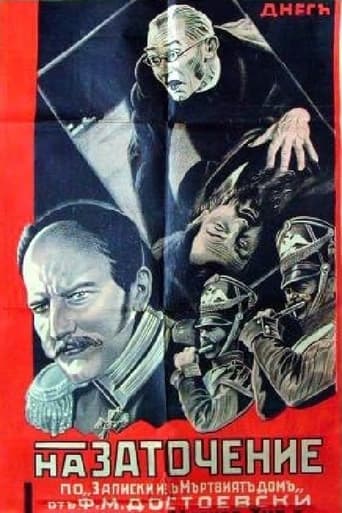
Viktor Borisovich Shklovsky was a towering figure in 20th-century Russian intellectual life, primarily celebrated as a pioneering literary theorist and a founding father of Russian Formalism. Born in St. Petersburg in 1893, he co-founded the Society for the Study of Poetic Language (OPOYAZ) in 1916, where he developed the revolutionary concept of 'ostranenie' or defamiliarization. His career in cinema was equally profound; he was one of the first serious theorists to analyze film as a distinct artistic language, publishing 'Literature and Cinematography' in 1923. Throughout the 1920s and 1930s, Shklovsky worked extensively as a screenwriter for major Soviet directors like Lev Kuleshov, Abram Room, and Vsevolod Pudovkin. In the 1932 film 'House of the Dead' (Myortvyy dom), which he also scripted based on Dostoevsky's work, he made a rare and notable on-screen appearance playing the role of Mikhail Petrashevsky. Despite the political pressures of the Stalinist era, which forced him to publicly renounce Formalism in 1930, he remained a prolific writer and cultural critic until his death in 1984, leaving an indelible mark on both literary and cinematic theory.
The Craft
On Screen
In his rare acting appearance in 'House of the Dead', Shklovsky delivered a performance characterized by intellectual intensity and historical gravity, fitting for his portrayal of the real-life revolutionary Mikhail Petrashevsky. His presence on screen was less about traditional theatricality and more about embodying the ideological weight of the character, reflecting his own deep connection to the historical and literary material he often adapted.
Milestones
- Founded OPOYAZ (Society for the Study of Poetic Language) in 1916
- Developed the influential concept of 'Defamiliarization' (Ostranenie) in 1917
- Published the seminal theoretical work 'Theory of Prose' in 1925
- Authored the screenplay for the avant-garde classic 'Bed and Sofa' (1927)
- Portrayed Mikhail Petrashevsky in the film 'House of the Dead' (1932)
- Awarded the State Prize of the USSR in 1979 for his work on Sergei Eisenstein
Best Known For
Iconic Roles
Must-See Films
Accolades
Won
- State Prize of the USSR (1979)
- Order of the Red Banner of Labour
- Order of the Friendship of Peoples
Special Recognition
- Honorary Member of the Union of Soviet Writers
- Recognized as a leading figure of the Russian Formalist movement
Working Relationships
Worked Often With
Studios
Why They Matter
Impact on Culture
Shklovsky's impact on cinema is foundational; he bridged the gap between literary theory and the emerging art of the moving image. By introducing 'defamiliarization' to film studies, he encouraged filmmakers to use editing, camera angles, and narrative structure to force audiences to perceive the world in new, non-automatic ways. His work at the 'Third Factory' of Goskino helped define the sophisticated narrative techniques of the Soviet montage era, influencing how stories were told visually across the globe.
Lasting Legacy
His legacy resides in the very vocabulary of modern film and literary criticism. Concepts like 'plot vs. story' (sjuzhet and fabula) and 'making strange' remain central to academic curricula worldwide. In film history, he is remembered as the intellectual architect behind some of the most daring scripts of the silent era, ensuring that early Soviet cinema was as theoretically rigorous as it was visually experimental.
Who They Inspired
He directly influenced the 'Soviet Montage' directors, particularly Eisenstein and Kuleshov, by providing a theoretical framework for their experiments. Later, his ideas were rediscovered by Western film theorists in the 1960s, influencing the French New Wave and the development of structuralist film theory.
Off Screen
Shklovsky was born into a family of diverse heritage; his father was a mathematician of Lithuanian Jewish descent and his mother was of German-Russian origin. He was married to Vasilisa Georgievna Kordi, with whom he had two children. His life was marked by the political upheavals of the 20th century, including service in World War I, involvement in the February Revolution, and a brief period of exile in Berlin in the early 1920s.
Education
St. Petersburg Imperial University (studied Philology and History)
Family
- Vasilisa Georgievna Kordi
Did You Know?
- He was a driving instructor for an armored car unit during World War I.
- He once had to flee across the frozen Gulf of Finland to escape arrest by the Bolsheviks.
- His book 'Zoo, or Letters Not About Love' was written as an appeal to the Soviet government to allow him to return from exile.
- He referred to his work in the film industry as his 'Third Factory' of intellectual production.
- He was a close personal friend of the poet Vladimir Mayakovsky.
- Despite being a theorist, he was wounded in action during WWI and received a medal for bravery.
In Their Own Words
Art is a way of experiencing the artfulness of an object; the object is not important.
The technique of art is to make objects 'unfamiliar,' to make forms difficult, to increase the difficulty and length of perception.
In order to restore as perception what is known as 'life,' to make one feel things, to make the stone stony, there exists that which is called art.
Frequently Asked Questions
Who was Viktor Shklovsky?
Viktor Shklovsky was a renowned Russian literary theorist, screenwriter, and critic who founded the Russian Formalist movement. He is best known for creating the concept of 'defamiliarization' and for his extensive contributions to early Soviet cinema as a writer and theorist.
What films is Viktor Shklovsky best known for?
He is best known for writing the screenplays for silent classics such as 'By the Law' (1926), 'Bed and Sofa' (1927), and 'The House on Trubnaya' (1928). He also wrote and acted in the 1932 Dostoevsky adaptation 'House of the Dead'.
When was Viktor Shklovsky born and when did he die?
He was born on January 24, 1893, in St. Petersburg, Russia, and passed away on December 6, 1984, in Moscow at the age of 91.
What awards did Viktor Shklovsky win?
His most prestigious honor was the State Prize of the USSR, awarded in 1979. He also received various state orders for his lifelong contributions to Soviet literature and cinema.
What was Viktor Shklovsky's artistic style?
His style was rooted in Formalism, emphasizing the 'how' of art over the 'what.' In cinema, he advocated for techniques that disrupted habitual perception, using complex narrative structures and editing to make the audience see the world through a fresh, artistic lens.
Learn More
Films
1 film