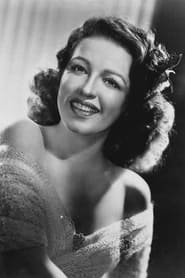
Anita Ellis
Actor
Born: March 16, 1920 in Montreal, Quebec, Canada Died: October 28, 2015 Active: 1940-1980 Birth Name: Anita Kert
About Anita Ellis
Anita Ellis was a premier Canadian-American singer and actress who became one of the most prolific 'ghost singers' during the Golden Age of Hollywood. Born Anita Kert in Montreal, she was the sister of 'West Side Story' star Larry Kert and began her career in radio before transitioning to the screen. Although she appeared on camera in productions like 'A Touch of Magic' (1961), her primary contribution to cinema was providing the singing voices for legendary actresses who could not match her vocal prowess. She is most famously the voice behind Rita Hayworth's iconic performance in 'Gilda' (1946) and 'The Lady from Shanghai' (1947), as well as Vera-Ellen in several MGM musicals. Despite suffering from severe stage fright that limited her live performances, her velvet-toned contralto became a staple of 1940s and 1950s musical cinema. Her career spanned radio, records, and television, establishing her as a musician's singer highly respected by peers like Tony Bennett and Barbra Streisand.
The Craft
On Screen
As an on-screen performer, Ellis possessed a sophisticated and elegant presence, often utilized in musical specials and television dramas. However, her true 'acting' occurred through her vocal performances, where she meticulously matched the breath, phrasing, and lip movements of the stars she dubbed, ensuring a seamless integration of voice and persona.
Milestones
- Provided the singing voice for Rita Hayworth in the legendary 'Put the Blame on Mame' sequence in Gilda (1946)
- Dubbed the singing voice for Vera-Ellen in the classic MGM musical Three Little Words (1950)
- Released the critically acclaimed album 'Anita Ellis: Echoes' in 1979, which earned a Grammy nomination
- Was a regular featured vocalist on the popular Red Skelton Radio Show in the 1940s
- Performed a celebrated concert series at Alice Tully Hall in 1979, overcoming decades of performance anxiety
- Dubbed Jeanne Crain in the musical Gentlemen Marry Brunettes (1955)
Best Known For
Iconic Roles
Must-See Films
Accolades
Won
- Grammy Award Nomination for Best Jazz Vocal Performance, Female (1980)
Nominated
- Grammy Nomination for the album 'Echoes' (1980)
Special Recognition
- Recognized by the American Songbook Hall of Fame for her contributions to vocal jazz
- Subject of the documentary 'Anita Ellis: For the Record' (1979)
Working Relationships
Worked Often With
Studios
Why They Matter
Impact on Culture
Anita Ellis played a crucial role in maintaining the 'illusion' of the Hollywood musical. By providing the singing voices for stars like Rita Hayworth, she helped create some of the most enduring archetypes of the femme fatale and the musical ingenue. Her work represents a hidden history of women in Hollywood whose talents were essential to the success of major stars, yet who often remained uncredited to preserve the studio's marketing of 'triple-threat' celebrities.
Lasting Legacy
Ellis is remembered as one of the greatest 'pure' vocalists of the 20th century. Her legacy lives on through the iconic musical numbers of the 1940s that are still studied by film historians and enjoyed by audiences today. In the jazz world, she is revered for her impeccable phrasing and emotional depth, with her late-career recordings serving as a masterclass in vocal interpretation.
Who They Inspired
She influenced a generation of session singers and vocalists who sought to master the art of 'character singing.' Her ability to project emotion through a microphone without the aid of visual acting influenced modern recording artists who prioritize storytelling within a song.
Off Screen
Anita Ellis was born into a Jewish family in Montreal; her father was a businessman and her mother was a talented pianist. She was the older sister of actor Larry Kert, who originated the role of Tony in Broadway's 'West Side Story'. She struggled for much of her life with a paralyzing form of stage fright that made live public appearances difficult, leading her to focus on studio recording and dubbing. She was married to neurologist Mortimer Shapiro from 1960 until his death in 2011.
Education
Studied at the Cincinnati College-Conservatory of Music
Family
- Mortimer Shapiro (1960-2011)
Did You Know?
- She was so shy that she often recorded her vocals behind a screen or in a darkened studio.
- For years, many fans believed Rita Hayworth was actually singing in 'Gilda' because Ellis's synchronization was so perfect.
- Her brother, Larry Kert, was the original Tony in the 1957 Broadway production of West Side Story.
- She suffered from such severe stage fright that she once fainted before a performance.
- She didn't receive screen credit for many of her most famous singing roles due to studio policies of the era.
- She was a favorite of songwriter Harold Arlen, who considered her one of the best interpreters of his music.
- In her later years, she suffered from Alzheimer's disease but could still remember the lyrics to her songs.
In Their Own Words
I was the voice of the stars, but I was always invisible.
The microphone was my friend; the audience was my fear.
When I sang for Rita [Hayworth], I tried to breathe when she breathed.
Frequently Asked Questions
Who was Anita Ellis?
Anita Ellis was a Canadian-American singer and actress best known as a 'ghost singer' who provided the singing voices for Hollywood stars like Rita Hayworth and Vera-Ellen in the 1940s and 50s.
Did Anita Ellis actually sing in Gilda?
Yes, Anita Ellis provided the singing voice for Rita Hayworth in 'Gilda', including the famous performance of 'Put the Blame on Mame'.
Why didn't Anita Ellis become a major on-screen star?
Despite her beauty and immense talent, Ellis suffered from debilitating stage fright that made live performing and on-camera work stressful, leading her to prefer the anonymity of the recording studio.
What was Anita Ellis's most famous song?
While she recorded many, she is most associated with the song 'Put the Blame on Mame' from the film Gilda, though her voice was credited to Rita Hayworth.
Was Anita Ellis related to anyone famous?
Yes, she was the sister of Larry Kert, the actor who famously originated the role of Tony in the original Broadway production of West Side Story.
Learn More
Films
1 film