
Paul Scardon
Actor
Born: May 6, 1874 in Melbourne, Australia Died: January 17, 1954 Active: 1909-1948 Birth Name: William James Raper
About Paul Scardon
Paul Scardon was a prolific Australian-born actor and director who became a significant figure in the American silent film industry, particularly during his tenure at Vitagraph Studios. Born William James Raper in Melbourne, he began his career as a contortionist and vaudeville performer at the age of 15 before transitioning to legitimate theater under the mentorship of J.C. Williamson. He moved to the United States in 1905 with the Nance O'Neil company and quickly established himself on the Broadway stage in productions like 'Mrs. Bumpstead-Leigh' and 'Becky Sharp.' Scardon entered the film industry around 1909, initially working as an actor for D.W. Griffith and later for the Majestic and Reliance studios. By 1915, he shifted his focus toward directing for Vitagraph, where he became known for his meticulous use of makeup and his ability to handle complex melodramas. He is perhaps best remembered for directing many of the films that launched the career of his second wife, the exotic silent star Betty Blythe, before retiring from directing in the mid-1920s. Though he spent his later years operating a citrus farm in California, he returned to the screen as a character actor and extra in the late 1930s and 1940s, appearing in classics such as 'Waterloo Bridge' and 'The Adventures of Mark Twain.'
The Craft
On Screen
In his early career, Scardon was celebrated for his versatility and mastery of character makeup, often transforming himself completely for diverse roles. During the silent era, his performances were noted for their theatrical precision, a remnant of his extensive background on the Australian and Broadway stages. In his later years as a character actor, he transitioned to a more naturalistic, understated style, often playing 'doddery' or gentlemanly bit parts.
Milestones
- Debuted as a vaudeville contortionist at age 15 in Australia
- Toured the United States with the Nance O'Neil theatrical company in 1905
- Became a leading director at Vitagraph Studios in 1915
- Directed the early career-defining films of silent star Betty Blythe
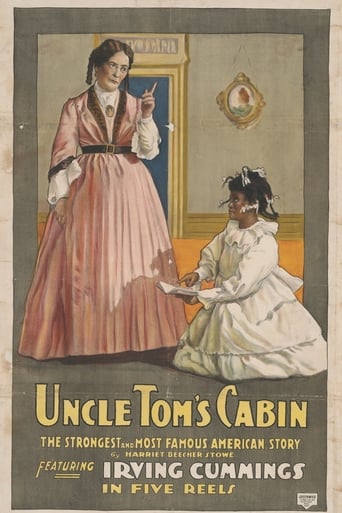
- Cast as Haley in the historically significant 1914 version of 'Uncle Tom's Cabin'
- Returned to Hollywood as a character actor in the late 1930s after a decade-long hiatus
Best Known For
Iconic Roles
Must-See Films
Accolades
Special Recognition
- Selected for preservation in the National Film Registry (Uncle Tom's Cabin, 1914)
- Recognized as a 'Master Makeup Artist' by Picture-Play Weekly (1915)
Working Relationships
Worked Often With
Studios
Why They Matter
Impact on Culture
Paul Scardon played a pivotal role in the transition of acting techniques from the broad gestures of the 19th-century stage to the more nuanced requirements of the motion picture camera. His 1914 portrayal of the slave dealer Haley in 'Uncle Tom's Cabin' contributed to one of the most culturally significant films of the era, which was the first to feature an African American actor (Sam Lucas) in a leading role. As a director, he helped define the 'Vitagraph style' of the late 1910s, which emphasized high production values and sophisticated melodramatic storytelling.
Lasting Legacy
Scardon's legacy is preserved through his contributions to the silent era's technical evolution, particularly in the realm of cinematic makeup and character acting. While many of his directorial works are now lost, his influence remains visible through the stardom of Betty Blythe, whose career he meticulously helped build. He is also remembered as a pioneer of the Australian 'theatrical export,' being one of the first Australian performers to achieve sustained success as both an actor and director in Hollywood's Golden Age.
Who They Inspired
He influenced the early development of screen makeup, with trade journals of the 1910s highlighting his 'clever use of makeup' as a model for other character actors. His transition from a successful director to a humble character actor in the sound era served as a blueprint for many silent-era veterans who sought to remain active in the industry after the advent of 'talkies.'
Off Screen
Scardon was married twice. His first wife was an Australian-born actress who died during the Spanish Flu epidemic in late 1918. In 1919, he married the rising star Betty Blythe, whom he had directed at Vitagraph. The couple remained married for 35 years until his death in 1954. In his private life, he was an avid breeder of prize-winning bulldogs and spent much of his retirement tending to a citrus orchard in Fontana, California.
Education
Educated in Melbourne, Australia; early training in vaudeville and pantomime.
Family
- Bessie (died 1918)
- Betty Blythe (1919-1954)
Did You Know?
- He began his professional life as a telegraph operator in the goldfield town of Boulder, Western Australia.
- Before becoming a dramatic actor, he was a professional contortionist in vaudeville.
- He was a renowned breeder of prize-winning bulldogs outside of his film career.
- He appeared as an uncredited extra in several 'Joe Palooka' films in the 1940s.
- He directed at least 11 films starring his wife, Betty Blythe, between 1918 and 1919.
- He returned to acting in 1939 after a 15-year retirement from the industry.
- He played the role of author Rudyard Kipling in the 1944 biopic 'The Adventures of Mark Twain.'
- He was a close friend of the Majeroni brothers, fellow Australian actors who followed him to Vitagraph.
In Their Own Words
A director is the only man besides your husband who can tell you how much of your clothes to take off. (Attributed to his wife Betty Blythe regarding his direction)
Makeup is the actor's silent partner; it tells the audience who you are before you even speak a word. (Paraphrased from 1915 interview)
Frequently Asked Questions
Who was Paul Scardon?
Paul Scardon was an Australian-born actor and director who became a prominent figure in American silent cinema, particularly at Vitagraph Studios. He is known for his mastery of character makeup and for directing many of the films of his wife, silent star Betty Blythe.
What films is Paul Scardon best known for?
He is best known for acting in the 1914 version of 'Uncle Tom's Cabin' and 'The Battle Cry of Peace' (1915). As a director, his notable works include 'Arsene Lupin' (1917) and 'Partners of the Night' (1920).
When was Paul Scardon born and when did he die?
Scardon was born on May 6, 1874, in Melbourne, Australia, and died of a heart attack on January 17, 1954, in Fontana, California.
Was Paul Scardon married to a famous actress?
Yes, he was married to the famous silent film 'vamp' and exotic star Betty Blythe from 1919 until his death in 1954.
What was Paul Scardon's acting style?
Scardon was a versatile character actor known for his theatrical precision and expert use of makeup to transform into diverse roles. In his later career, he became a reliable bit-part player in Hollywood sound films.
Did Paul Scardon win any awards?
While he did not win major competitive awards like the Oscar, his 1914 film 'Uncle Tom's Cabin' was inducted into the National Film Registry for its historical significance.
Learn More
Films
1 film