Born: November 23, 1934 in Los Angeles, California, USAActive: 1961-present
About Robert Towne
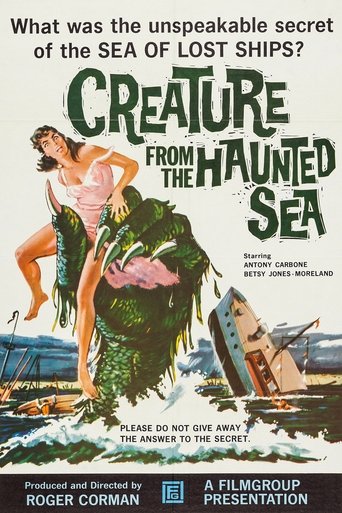
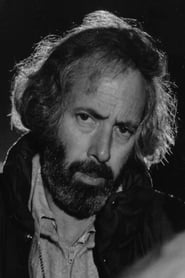
Robert Towne is primarily known as one of Hollywood's most celebrated screenwriters, though he began his career with a brief stint as an actor. Born in Los Angeles in 1934, Towne attended Pomona College where he developed his passion for writing. His early career included small acting roles, most notably as 'Bob' in Roger Corman's 1961 cult film 'Creature from the Haunted Sea.' However, Towne quickly transitioned behind the camera, establishing himself as a formidable screenwriter during the New Hollywood era of the 1970s. His breakthrough came with 'Chinatown' (1974), which earned him an Academy Award and is widely regarded as one of the greatest screenplays ever written. Throughout his career, Towne has been known for his meticulous research, complex character development, and ability to craft sophisticated narratives that blend genres. He also ventured into directing with films like 'Personal Best' (1982) and 'Tequila Sunrise' (1988). Towne's influence on screenwriting has been profound, with his work studied in film schools and admired by generations of writers.
The Craft
On Screen
Towne's brief acting career in the early 1960s showed a naturalistic, understated approach typical of the era's low-budget independent films. In 'Creature from the Haunted Sea,' he delivered a straightforward performance that served the film's comedic tone without drawing attention to itself.
Robert Towne has been married twice and has two daughters. His first marriage to actress Julie Payne ended in divorce. He later married Luisa Gulliver, with whom he had his children. Towne has been known for his privacy regarding personal matters but has occasionally spoken about his passion for horse racing and his long-standing friendship with fellow filmmaker Jack Nicholson.
spouses
children
education
Pomona College (graduated 1956) with a degree in philosophy
studioAffiliations
frequentCollaborators
mentors
protégés
culturalImpact
Robert Towne revolutionized Hollywood screenwriting with his intricate plotting, rich character development, and thematic depth. 'Chinatown' became the gold standard for noir screenplays, influencing countless filmmakers and establishing Towne as a master craftsman. His ability to blend genres while maintaining psychological realism helped define the sophisticated filmmaking of the 1970s New Hollywood era. Towne's work demonstrated that popular entertainment could also be artistically ambitious, paving the way for more complex storytelling in mainstream cinema.
legacy
Towne's legacy is cemented by 'Chinatown,' which consistently ranks among the greatest screenplays in film history. His meticulous approach to research and authenticity set new standards for screenwriting craft. Beyond his own films, Towne's influence extends through his uncredited work on numerous classic films and his mentorship of other writers. His career exemplifies the evolution of American cinema from the studio system to the independent-minded filmmaking of the 1970s and beyond.
influence
Towne's screenwriting techniques, particularly his use of subtext and complex character motivations, have influenced generations of writers. His ability to create morally ambiguous characters and intricate plot structures can be seen in the work of contemporary filmmakers like Paul Thomas Anderson and David Fincher. The 'Towne method' of exhaustive research and character backstory has become standard practice in quality Hollywood screenwriting.
trivia
famousQuotes
controversies
Towne's most notable controversy involved his removal from 'The Godfather Part II' after creative differences with Francis Ford Coppola. He also had a famous dispute with Warner Bros. over 'Greystoke,' resulting in his pseudonym credit. His uncredited contributions to major films like 'Bonnie and Clyde' and 'The Godfather' have been the subject of ongoing industry discussion about screenwriting credit and recognition.