Yakov Gudkin
Actor
Born: March 19, 1905 in Smolensk, Russian Empire Died: October 7, 1979 Active: 1923-1974 Birth Name: Yakov Matveevich Gudkin
About Yakov Gudkin
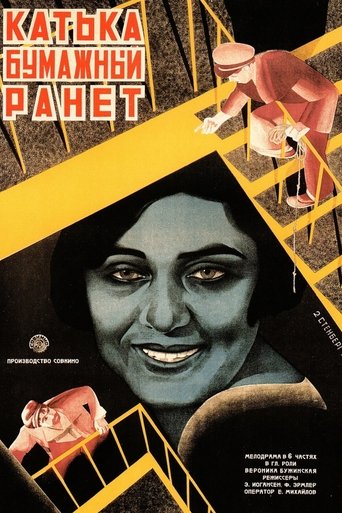
Yakov Matveevich Gudkin was a distinguished Soviet character actor whose career spanned the formative years of silent cinema through the post-war era. Born in Smolensk in 1905, he moved to Leningrad to pursue his passion for the arts, graduating from the Institute of Screen Arts in 1925. He quickly became a staple of early Soviet cinema, collaborating with legendary directors like Fridrikh Ermler in landmark films such as 'Katka's Reinette Apples' and 'Fragment of an Empire.' During the 1930s, he balanced his screen work with a dedicated stage career at the Leningrad Youth Theater (Lentuz), where he honed his craft in professional children's theater. When World War II broke out, Gudkin served with distinction as the head of a divisional club, earning several military honors including the Order of the Red Star. After the war, he transitioned into a role as an entertainer and master of ceremonies before returning to the screen and the Theater-Studio of Film Actors at Lenfilm, remaining active in the industry until his death in 1979.
The Craft
On Screen
Gudkin was known for his versatility as a character actor, often portraying everyday Soviet citizens, soldiers, or slightly eccentric figures. His early work in silent cinema required a high degree of physical expressiveness, which he later tempered with a naturalistic and grounded approach in sound films. His background in youth theater gave him a unique ability to connect with audiences through sincerity and clear, impactful characterizations.
Milestones
- Graduated from the Leningrad Institute of Screen Arts in 1925
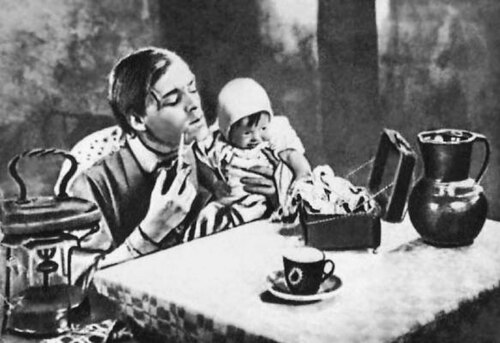
- Starred in the seminal Soviet silent film 'Fragment of an Empire' (1929)
- Served as a prominent member of the Leningrad Youth Theater (1932-1941)
- Decorated war veteran with the Order of the Red Star (1947)
- Long-term association with the Lenfilm Studio's Theater-Studio of Film Actors
Best Known For
Iconic Roles
Must-See Films
Accolades
Won
- Order of the Red Star (November 6, 1947)
- Medal 'For the Defence of Leningrad'
- Medal 'For the Defence of Moscow'
- Medal 'For the Defence of the Soviet Transarctic'
- Medal 'For the Victory over Germany in the Great Patriotic War 1941–1945'
- Medal 'In Commemoration of the 250th Anniversary of Leningrad'
Special Recognition
- Recognized as a veteran of the Great Patriotic War
- Long-standing member of the Union of Cinematographers of the USSR
Working Relationships
Worked Often With
Studios
Why They Matter
Impact on Culture
Yakov Gudkin was a vital part of the 'Leningrad School' of acting during the 1920s and 30s. His participation in Fridrikh Ermler’s films helped define the psychological realism that would become a hallmark of Soviet cinema. By bridging the gap between silent expressionism and the socialist realism of the talkies, Gudkin helped maintain a standard of artistic excellence during a period of intense political and stylistic transition.
Lasting Legacy
Gudkin's legacy is preserved in some of the most important works of early Soviet cinema, particularly 'Fragment of an Empire,' which is frequently cited by film historians as a masterpiece of the silent era. He is remembered as a reliable and talented character actor who contributed to the prestige of the Lenfilm studio for over five decades.
Who They Inspired
His work in the Leningrad Youth Theater influenced generations of Soviet actors who learned to balance the demands of theatrical performance with the intimacy of the camera. His transition from silent film to sound and then to variety entertainment (as a master of ceremonies) showcased a professional adaptability that served as a model for Soviet performers.
Off Screen
Gudkin's life was deeply intertwined with the cultural fabric of Leningrad. Outside of his professional acting, he was known for his service during World War II, where he used his artistic talents to boost morale as the head of a divisional club. He lived through the Siege of Leningrad, a fact reflected in several of his military commendations.
Education
Institute of Screen Arts, Leningrad (Graduated 1925)
Did You Know?
- His film debut was in a 1924 documentary/educational short about Scarlet Fever ('Skarlatina').
- He was a master of ceremonies (konferansye) for nearly 16 years between 1946 and 1962.
- Gudkin appeared in the 1966 cult classic 'Three Fat Men,' directed by Aleksey Batalov.
- He served as the head of a divisional club during WWII, organizing entertainment for frontline soldiers.
- Despite his long career, he often played uncredited or small character roles that became memorable due to his distinct screen presence.
- He is one of the few actors to have worked through the entire evolution of the Leningrad film industry from the early 1920s to the late 1970s.
Frequently Asked Questions
Who was Yakov Gudkin?
Yakov Gudkin was a prominent Soviet character actor known for his work in both silent and sound films, as well as his long tenure at the Leningrad Youth Theater.
What films is Yakov Gudkin best known for?
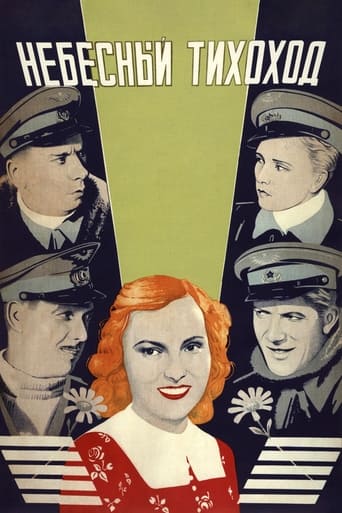
He is best known for his roles in the silent masterpieces 'Fragment of an Empire' (1929) and 'Katka's Reinette Apples' (1926), as well as the popular sound films 'The Goalkeeper' (1936) and 'The Sky Slow-Mover' (1945).
When was Yakov Gudkin born and when did he die?
He was born on March 19, 1905, in Smolensk and passed away on October 7, 1979, in the Soviet Union.
What awards did Yakov Gudkin win?
While he did not win major international acting awards, he was highly decorated for his military service during WWII, receiving the Order of the Red Star and several medals for the defense of major Soviet cities.
What was Yakov Gudkin's acting style?
Gudkin was a versatile character actor who specialized in psychological realism and expressive physical performance, a skill he developed during the silent era and refined through decades of stage work.
Learn More
Films
4 films