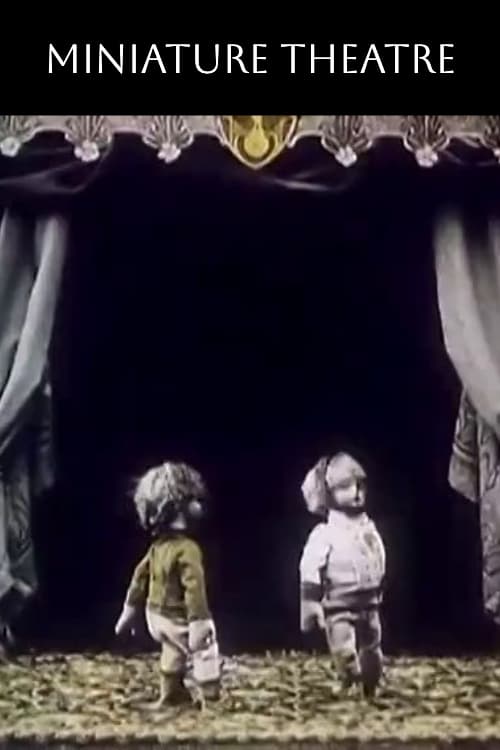
Miniature Theatre
Keys: Space play/pause · ←/→ 10s · F fullscreen · M mute · </> speed
Plot
Three young children enthusiastically set up a small table and place a miniature theater stage upon it. With great anticipation, they watch as the stage curtain opens by itself, revealing a rolled carpet that magically unrolls across the tiny stage. Two puppet figures emerge from the wings and begin to perform an entertaining series of routines, delighting the children and demonstrating the magical possibilities of cinema. The puppets engage in various antics, showcasing the innovative animation techniques of the era. The film captures the wonder of childhood imagination and the emerging art of animated storytelling.
About the Production
Release Date 1906
Production Georges Méliès, Star Film Company
Filmed In Paris, France
This film was created using stop-motion animation techniques, a relatively new method at the time. Méliès used his innovative substitution splices and multiple exposures to create the magical effects. The miniature theater set was meticulously crafted by hand, and the puppet movements were achieved through frame-by-frame manipulation. The film was shot in Méliès's studio in Montreuil, which featured a glass-roofed stage to maximize natural lighting.
You Might Also Like
More Comedy Films
View all →







Themes & Topics
puppetsminiature theaterstop-motion animationmagicchildrenstage performancespecial effects
Historical Background
In 1906, cinema was still in its infancy, with most films being simple actualities or basic narrative pieces. The film industry was rapidly evolving from novelty to art form, with pioneers like Georges Méliès pushing the boundaries of what was possible. This period saw the development of film grammar, editing techniques, and special effects. France was the center of early film production, with companies like Pathé and Gaumont dominating the global market. Méliès's work represented the magical and fantastical possibilities of cinema at a time when most filmmakers focused on reality. The film emerged during the Belle Époque, a period of artistic innovation and cultural optimism in France.
Why This Film Matters
Miniature Theatre represents a crucial milestone in the development of animation as an art form. As one of the earliest surviving examples of stop-motion animation, it demonstrates the nascent techniques that would later evolve into sophisticated animation methods. The film exemplifies Méliès's contribution to cinematic language, particularly his use of special effects to create magical realism. It also reflects the Victorian fascination with miniatures and automata, translating this cultural interest into the new medium of film. The work paved the way for future animation pioneers and helped establish cinema as a medium for fantasy and imagination, not just reality.
Making Of
Georges Méliès, a former theater owner and magician, brought his theatrical sensibilities to this innovative short film. The production involved creating a detailed miniature theater set, complete with working curtains and props. Méliès and his team painstakingly animated the puppet figures using stop-motion techniques, moving them slightly between each film frame to create the illusion of movement. The film was shot on a single camera setup in Méliès's glass studio, which allowed for consistent lighting throughout the day. The magical elements, such as the self-unrolling carpet, were achieved through careful editing and multiple exposure techniques that Méliès had perfected over years of experimentation.
What Critics Said
Contemporary reviews of Méliès's films were generally positive, with critics and audiences marveling at his magical effects and innovative techniques. Trade publications of the era praised his ability to create impossible scenes on film. Modern film historians recognize Miniature Theatre as an important early work in animation history, though it's less famous than some of Méliès's other productions like 'A Trip to the Moon.' Critics today appreciate the film's technical achievements and its role in the development of stop-motion animation, noting how it demonstrates Méliès's continual experimentation with cinematic possibilities.
Did You Know?
- This film is one of the earliest examples of stop-motion animation in cinema history
- Director Georges Méliès was originally a magician before becoming a filmmaker, which influenced his magical approach to cinema
- The film was cataloged as Star Film Company production number 868-869
- Méliès created over 500 films during his career, with many featuring similar magical themes
- The puppet figures were manipulated using thin wires that were carefully hidden from the camera
- This film was part of Méliès's series of 'trick films' that showcased his innovative special effects techniques
- The miniature theater set was built to scale, with incredible attention to detail for such a short film
- Méliès often played multiple roles in his films, though it's unclear if he appears in this one
- The film was hand-colored in some releases, a common practice for Méliès's more important works
- This film represents Méliès's experimentation with combining live-action and animation techniques
More film details Visual style, music, quotes, restoration, and more
Visual Style
The film employs the static camera typical of early cinema, with the entire action taking place within a single frame. Méliès used his signature theatrical composition, arranging the scene as if it were a stage performance. The lighting was natural, coming through the glass roof of his studio, creating a bright, clear image that showcased the miniature details. The cinematography emphasizes the artificiality of the scene while maintaining the illusion of a real miniature theater. The camera work is straightforward but effective, allowing the magical effects and puppet movements to take center stage without visual distractions.
Innovations
This film showcases several important technical innovations for its time. The use of stop-motion animation was groundbreaking, representing one of the earliest applications of this technique. Méliès's mastery of substitution splices allowed for the magical appearance and disappearance of objects. The film also demonstrates sophisticated use of miniatures in cinema, with carefully crafted sets that created the illusion of a real theater. The combination of live-action (the children) with animation (the puppets) was an early example of mixed media filmmaking. These techniques would become fundamental to later animation and special effects work in cinema.
Music
As with all films of this era, Miniature Theatre was produced as a silent film. During exhibition, it would have been accompanied by live music, typically a pianist or small orchestra in theaters, or possibly a phonograph record in smaller venues. The musical accompaniment would have been chosen to match the whimsical and magical nature of the film, likely featuring light, playful melodies that enhanced the puppet performances. No specific score was composed for the film, leaving the musical interpretation to individual exhibitors.
Memorable Scenes
- The magical moment when the carpet unrolls by itself across the miniature stage, showcasing Méliès's pioneering special effects techniques
What Audiences Thought
Early 20th-century audiences were delighted by Méliès's magical films, which stood out from the more common actualities and simple comedies of the time. Viewers were particularly fascinated by the impossible movements and magical transformations that cinema could present. The film's whimsical nature and childlike wonder appealed to both adults and children, making it popular in various exhibition venues from fairgrounds to dedicated theaters. While specific audience reactions to this particular film weren't documented, Méliès's work generally drew enthusiastic responses for its creativity and technical wizardry.
Film Connections
Influenced By
- Victorian automata
- Magic lantern shows
- Theatrical stage magic
- Méliès's background as a magician
This Film Influenced
- Later stop-motion animation works
- Willis O'Brien's early animations
- Ladislas Starevich's puppet films
Film Restoration
The film survives in archives, with prints held at the Cinémathèque Française and other film preservation institutions. Some versions exist with original hand-coloring. The film has been restored and is available through various archival collections.
Where to Watch
- Available on YouTube through archival uploads
- Included in some Méliès collections on Blu-ray/DVD
- Accessible through film archive websites like the Cinémathèque Française's online platform
- Featured in streaming services specializing in classic cinema