



Dream of the Red Mansions
"A monumental cinematic adaptation of China's greatest literary masterpiece."
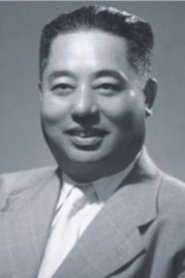
Directed by Bu Wan-Cang
Keys: Space play/pause · ←/→ 10s · F fullscreen · M mute · </> speed
Plot
Set within the opulent but declining Jia household during the Qing Dynasty, the story follows the tragic triangle between the sensitive and rebellious Jia Baoyu, his sickly yet intellectually brilliant cousin Lin Daiyu, and the socially adept Xue Baochai. Baoyu was born with a magical piece of jade in his mouth, symbolizing his spiritual connection to a higher realm, but the family's fortunes begin to crumble when this jade is lost, leading to a series of domestic catastrophes. As the family elders conspire to marry Baoyu to the 'ideal' Baochai through a cruel deception, Daiyu's health fails as she realizes her love is doomed, leading to her heartbreaking death. The film concludes with the total dissolution of the Jia estate's grandeur, serving as a poignant allegory for the transience of wealth and the cruelty of feudal social structures.
About the Production
Release Date 1944
Box Office High; it was one of the most successful commercial releases in occupied Shanghai.
Production China United Film Company (Zhonglian)
Filmed In Shanghai, China
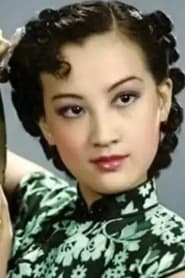
The film was produced during the Japanese occupation of Shanghai, which meant the production had to navigate strict censorship and resource shortages. Director Bu Wancang utilized a massive set to recreate the 'Grand View Garden,' which was a feat of engineering for the time. The casting of Zhou Xuan, known as the 'Golden Voice,' was a strategic move to ensure commercial success despite the political climate. The film was part of a trend of 'orphan island' or 'occupied' cinema where filmmakers turned to historical epics to avoid contemporary political controversy while still providing high-quality entertainment.
More History Films
View all →


More from Bu Wan-Cang
View all →
Themes & Topics
lost jadetragic romancedynastic declinecousin marriagefeudalismliterary adaptation18th century China
Historical Background
The film was released in 1944, a period when Shanghai was under Japanese occupation. During this time, the film industry was consolidated under the China United Film Company (Zhonglian). Filmmakers were often restricted from making overtly political films, leading many to turn to 'safe' historical or literary subjects. However, these films often carried subtle messages of cultural perseverance and national identity. The choice of 'Dream of the Red Mansions'—a cornerstone of Chinese identity—was a way to celebrate Chinese heritage during a time of foreign subjugation.
Why This Film Matters
This 1944 version remains a landmark in Chinese cinema as it represents the bridge between traditional Chinese opera aesthetics and modern film realism. It solidified Zhou Xuan's status as a cultural icon and set the standard for how the novel's complex characters should be portrayed on screen. It is also a key artifact of the 'Occupied Cinema' period, showing how high-quality art could still be produced under oppressive political conditions. For many years, this was the definitive visual reference for the novel until the 1962 Shaw Brothers version and the 1987 TV series.
Making Of
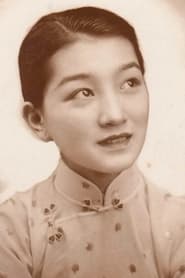
The production was marked by the unique challenge of filming in 'Occupied Shanghai' under the supervision of the Japanese-controlled China United Film Company. Director Bu Wancang had to balance the artistic demands of the classic text with the commercial requirements of the studio. One of the most significant creative choices was casting Yuan Meiyun as Jia Baoyu; this followed the Yue opera tradition where female performers played young, refined male roles (xiaosheng), which helped emphasize Baoyu's delicate and non-conformist nature. The set design for the 'Grand View Garden' was meticulously planned to allow for long tracking shots that moved through the various courtyards, creating a sense of immersive scale despite the limitations of the studio space.
What Critics Said
At the time of its release, the film was praised for its lavish production values and the performances of its lead actresses. Critics noted that while it condensed a massive novel into a manageable runtime, it retained the 'spirit' of the original work. Modern scholars view it as a sophisticated example of wartime filmmaking, though some contemporary critics at the time felt that the focus on the romantic triangle overshadowed the novel's deeper social critiques of the feudal system.
Did You Know?
- Zhou Xuan, who played Lin Daiyu, was primarily known as a singer and was the most famous star in China at the time.
- The film features an all-star cast of the 1940s Shanghai film industry, including Yuan Meiyun as the male lead Jia Baoyu (a tradition of cross-gender acting in Chinese opera styles).
- This was the first major sound-film adaptation of the novel 'Dream of the Red Chamber'.
- The director, Bu Wancang, was a veteran of the silent era and brought a highly sophisticated visual sense to the production.
- Due to wartime shortages, some of the elaborate costumes were actually made from repurposed vintage silks and theatrical rentals.
- The film's success led to a brief revival of interest in 'costume dramas' during the final years of the war.
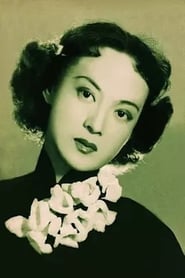
- Wang Danfeng, who played Xue Baochai, would later become one of the most celebrated actresses in the People's Republic of China.
- The film focuses heavily on the 'Jade' as a plot device to simplify the novel's complex Buddhist and Taoist metaphysics for a general audience.
Awards & Recognition
- Special Recognition for Artistic Achievement (Shanghai Film Critics Circle - Retrospective)
More film details Visual style, music, quotes, restoration, and more
Visual Style
The film utilizes a 'pictorialist' style, influenced by traditional Chinese painting. There is a heavy use of soft focus for the scenes involving Lin Daiyu to emphasize her fragility. The camera work is relatively static compared to modern films but features carefully composed frames that utilize the depth of the elaborate sets. Lighting is used dramatically to contrast the bright, festive early scenes with the dark, shadows-heavy atmosphere of the family's eventual downfall.
Innovations
The film is noted for its sophisticated set design and the use of forced perspective to make the 'Grand View Garden' appear larger than it was. It also featured advanced (for the time) sound synchronization, allowing for the musical numbers to be integrated more seamlessly into the narrative flow than in earlier Chinese 'talkies'.
Music
The soundtrack is notable for featuring several songs performed by Zhou Xuan, which became popular hits in their own right. The music blends traditional Chinese instruments (like the pipa and guzheng) with Western orchestral arrangements, a style typical of the 'Shanghai Sound' of the 1940s. The score heightens the melodrama, particularly during the 'Burning of the Manuscripts' scene.
Famous Quotes
Lin Daiyu: 'The flowers fade and fly, and who will pity them? When my soul flies away, who will bury me?'
Jia Baoyu: 'If you are a flower, I am the soil that protects your roots.'
Grandmother Jia: 'The jade is the life of this house; without it, we are but shadows.'
Memorable Scenes
- The Burial of the Flowers: Lin Daiyu weeps as she buries fallen blossoms, reflecting on her own mortality and loneliness.
- The Deception: Jia Baoyu lifts the bridal veil expecting to see Daiyu, only to find he has been married to Baochai.
- The Burning of the Manuscripts: A dying Daiyu burns her poems and handkerchiefs, symbols of her love for Baoyu.
- The Loss of the Jade: The chaotic scene where the family realizes the magical jade is missing, signaling their impending doom.
What Audiences Thought
The film was a massive hit with Shanghai audiences, who flocked to see their favorite stars in such a prestigious production. The inclusion of songs performed by Zhou Xuan was a major draw, and the film's tragic ending reportedly left audiences in tears. It provided a much-needed escape into a world of historical beauty during the hardships of the late war years.
Film Connections
Influenced By
- The 18th-century novel by Cao Xueqin
- Traditional Yue Opera
- Early Hollywood melodramas of the 1930s
This Film Influenced
- Dream of the Red Chamber (1962 Shaw Brothers)
- Dream of the Red Chamber (1987 TV Series)
- The Love Eterne (1963)
Film Restoration
The film has been preserved and underwent a digital restoration by the China Film Archive. While some original negatives were damaged over the decades, the restored version is widely available for academic study.
Where to Watch
- China Film Archive screenings
- Specialized classic Chinese cinema streaming platforms
- Educational institutions with Asian Cinema collections